BrokerHiveXBrokerHiveXBrokerHiveX
Summary:By 2025, forex trading costs will no longer be defined solely by surface-level spreads. While many brokers advertise "near-zero spreads" or "commission-free trading," the true cost of trading is increasingly complex, determined by liquidity conditions, execution models, regulatory pressures, and changes in market microstructure. This article provides a comprehensive analysis of forex trading cost trends in 2025, focusing on the evolution of spreads, commissions, slippage, and execution behavior under modern market conditions. We do not make horizontal comparisons of individual brokers, but rather help traders understand why costs behave this way and how to more accurately assess the trading environment. For traders seeking long-term consistency, understanding cost mechanisms is now as important as strategy design.
Many retail traders narrowly define trading costs as the visible spread . However, in reality, total trading costs comprise several components:
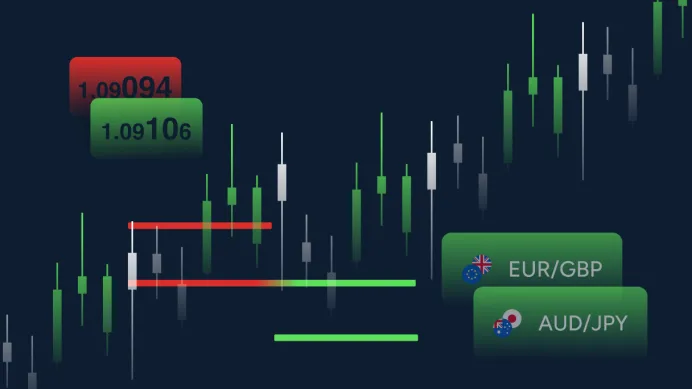
Bid spread (spread)
Commission (if applicable)
Slippage (positive slippage or negative slippage)
Execution delay
Swap/Overnight Interest Fees
Opportunity costs resulting from execution friction
By 2025, for short-term or high-frequency strategies, the hidden costs and volatility will often exceed the visible costs.
Over the past decade, the average spread of major currency pairs has narrowed significantly, thanks to:
Increased liquidity aggregation
Competition among brokers
Advances in trading technology
However, this trend has structurally reached its limit.
During periods of peak liquidity, the original spread often drops to 0.0 points.
During inactive periods, spread volatility increases significantly.
When news events occur, the spread widens more dramatically.
📌Key Insights :
A decrease in average spreads does not necessarily mean a decrease in total transaction costs— if volatility leads to a higher frequency of spread widening .
For more broker comparisons, please refer to the BrokerHiveX Global Broker List.
For serious traders, commission-based pricing models have become the mainstream.
The original spread more accurately reflects market prices.
Commissions increase cost transparency
Easier to calculate the true cost of each transaction
2025:
More brokers are offering "raw spread + commission" accounts.
Commission rates are relatively stable
Price competition is shifting its focus to execution quality rather than rate wars.
For active traders, predictable commission structures are generally better than more volatile spread pricing.
Liquidity in the foreign exchange market is no longer centralized but rather dispersed:
Major banks
non-bank liquidity providers
Electronic Communication Networks (ECNs)
Dark pool trading platform
This fragmentation leads to the following during periods of high volatility:
Increased slip
Transaction results differ across platforms
The importance of brokerage liquidity sources is rising.
📌Conclusion : Execution quality has become the decisive factor in cost efficiency, rather than just price itself.

Central Bank Decisions
Inflation data released
Geopolitical conflicts
This could lead to a temporary liquidity exodus, triggering:
Widening of spreads
Slippage spike
Execution delay
By 2025, algorithmic liquidity providers will withdraw returns faster than ever before, making short-term costs even more unpredictable.
Stricter regulations are reshaping brokerage pricing models.
Leverage cap limits trading frequency
Higher compliance costs compress pricing space
Greater transparency reduces hidden markups
While regulation has increased brokerage operating costs, it has also reduced manipulative pricing and improved long-term fairness.
For more information, please refer to the BrokerHiveX regulatory database.
The market maker model internalizes risk management.
Market execution transmits orders to liquidity providers.
By 2025, most regulated brokers will adopt market execution , but their execution rules will still differ significantly.
Average slip
Transaction speed
Requote frequency
Rejection rate
These factors are usually more critical than surface spot differences.
Highly sensitive to the following factors:
Execution delay
slip
Point difference mutation
Even a small increase in costs can wipe out a trading advantage.
More focus:
Swap rates
Spread stability
Execution reliability
For these types of traders, "cost predictability" is often more important than "absolute low cost".
Professional traders are increasingly inclined to use the **"full cost" assessment method**, including:
Average spread
commission
Typical slippage under normal conditions
This method is more accurate in presenting the true transaction costs than the promotional claims of brokers.
Nowadays, traders often refer to tools and research platforms such as BrokerHiveX to evaluate brokers based on their execution behavior and live trading conditions , rather than relying solely on official price promotions.
Liquidity provision will be more automated
During periods of low liquidity, spread volatility is further amplified.
Greater emphasis on implementation transparency
Price wars have decreased, while competition in infrastructure has increased.
✅ Transaction costs will no longer be a question of "who is cheaper", but rather "who is more stable and controllable".
By 2025, the determinants of forex trading costs will have long surpassed spreads and commissions . Liquidity behavior, execution models, regulatory policies, and market structure will play key roles in determining actual trading outcomes.
Traders who understand these structural mechanisms will gain an advantage , enabling them to make smarter choices regarding brokers, strategies, and execution methods.
As the market continues to evolve, cost awareness is no longer an option, but a core trading skill.
1. Will foreign exchange transaction costs be lower in 2025 than before?
Although the average spread is lower, the total cost volatility actually increases due to volatility and execution factors.
2. Is a commission account better?
This is usually the case, especially for active traders who seek transparency and predictable costs.
3. Why does the spread suddenly widen during news broadcasts?
Liquidity providers withdrawing their returns during periods of uncertainty increases temporary price risk.
4. How can traders reduce hidden costs?
Choose a broker with good execution quality and avoid trading during periods of extreme volatility.
5. Which is more important: low spreads or high-quality execution?
For short-term strategies, execution quality is often more important.
BrokerHivex is a financial media platform that displays information from the public internet or user uploads.
BrokerHivex does not endorse any trading platform or tool.
We assume no responsibility for any transaction disputes or losses arising from the use of information on this platform.
Please note: The information displayed on the platform may be delayed, and users should verify its accuracy themselves.
BrokerHivex is a financial media platform that displays information from the public internet or user-uploaded content. BrokerHivex does not support any trading platform or instrument. We are not responsible for any trading disputes or losses arising from the use of this information. Please note that the information displayed on the platform may be delayed, and users should independently verify its accuracy.