BrokerHiveXBrokerHiveXBrokerHiveX
Summary:In an industry where marketing hype often masks actual operational quality, determining whether a forex broker is truly "safe and reliable" is becoming increasingly difficult. Tight spreads, high leverage, and generous rewards may seem appealing, but they don't necessarily indicate genuine compliance. This guide aims to provide a trader-oriented, practical framework for assessing the safety of forex brokers, based on real-world conditions in 2025. Instead of relying on brand reputation or advertising rhetoric, we outline a series of verifiable criteria, from regulatory compliance and segregation of funds to execution practices and operational transparency, to help traders effectively mitigate non-market risks before placing orders.
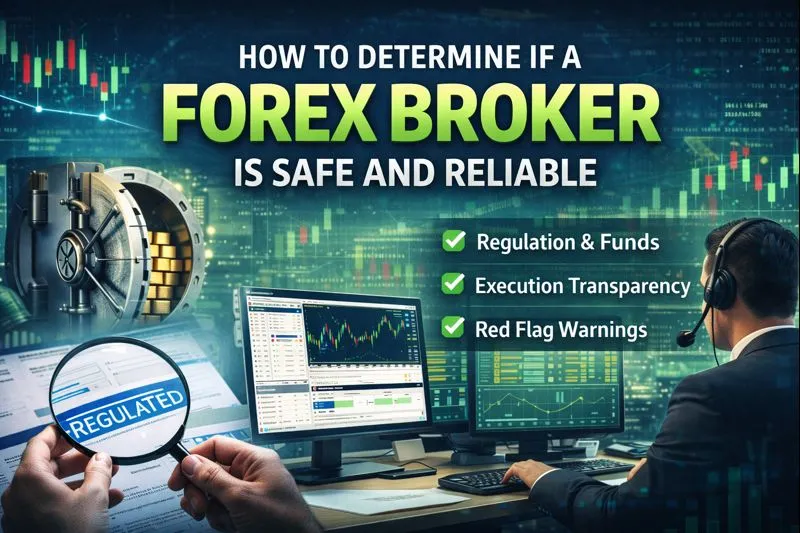
A broker’s security is not a single feature, but a suite of protections designed to reduce counterparty risk .
A secure broker should be able to:
Protect customer funds
Fair execution of trading orders
Transparent Operation
Maintain solvency under pressure
📌 Safety is about "risk control", not "profit commitment".
For more broker comparisons, please refer to the BrokerHiveX Global Broker List.
Regulation is the starting point for assessing safety, but it is often misunderstood.
Customer Fund Segregation Mechanism
Minimum capital requirements
Periodic audits and financial statements
Marketing and Code of Conduct Regulation
Commonly known regulatory agencies include:
The UK Financial Conduct Authority (FCA)
Australian Securities and Investments Commission (ASIC)
U.S. Commodity Futures Trading Commission (CFTC)
📌Items that cannot be guaranteed by regulators :
There is no guarantee that traders will not lose money.
The platform itself is not guaranteed to be profitable.
Without eliminating execution risks
✅ Key Insight: Regulation only reduces the risk of brokerage firms going bankrupt, it does not guarantee against trading risks .
For more regulatory information, please visit: BrokerHiveX Regulatory Disclosure Column
Many insecure platforms forge regulatory information . The correct verification method is as follows:
Visit the regulatory agency's website
Search by corporate entity name
Confirm license status and regulatory scope
Compare whether the domain name matches the licensed entity.
✅ If a company cannot be found in the regulatory database, it should be considered unregulated regardless of what the website claims.
The safety of customer funds is a key indicator of effective regulatory implementation.
📌 Core issue:
Are customer funds segregated from the company's own funds?
Which banks hold customer funds?
Does it provide a negative balance protection mechanism ?
👉 While isolation can reduce the risk of broker bankruptcy, isolation alone cannot guarantee the recovery of funds ; the actual enforcement effectiveness in different jurisdictions must also be considered.
Some regulatory jurisdictions offer additional investor compensation mechanisms .
Applicable only in the event of broker bankruptcy
There are usually compensation limits.
Involving jurisdictional areas and customer classification standards
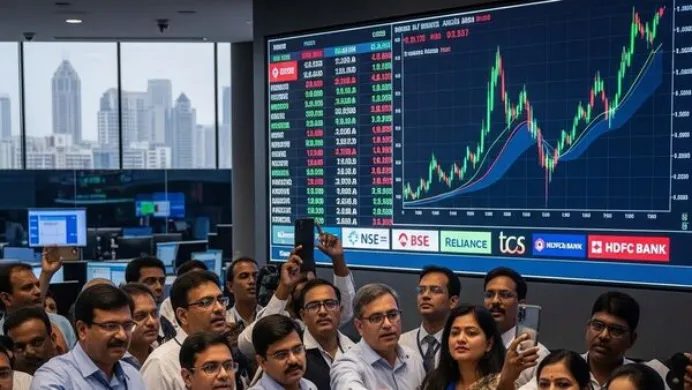
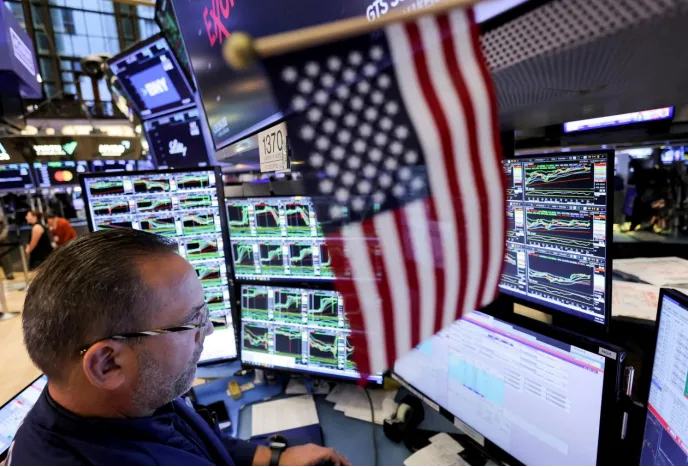
📷 Image description (page 4):
The image shows traders operating on a US stock exchange, with a background of multi-screen market data and the US flag, highlighting the themes of financial trading environment and investor protection.
These mechanisms are the last line of defense , but they cannot replace the importance of choosing a legitimate platform .
Some unsafe brokers commit fraud by manipulating execution actions rather than directly misappropriating funds.
High-frequency requotes
Slippage is only detrimental to traders.
Reject orders during fluctuations
Price anomalies that differ from mainstream markets
Conversely, transparent execution should include:
Market Execution
Symmetrical slip point
Clear order transaction records
✅Execution behavior often reflects a platform's ethics and true intentions better than spreads.
Understanding how brokers make money is crucial.
Market maker (internal matching)
STP/ECN (Straight to Market)
Hybrid mode
✅ These models themselves are not necessarily insecure; the real risk lies in their lack of transparency . Reliable platforms will clearly explain their implementation models and will not conceal potential conflicts of interest.
The length of time a broker has been operating and the degree of public disclosure are equally important.
Years since establishment
Financial disclosure records
Clear company structure
Real-time trading data and slippage report
✅ Companies that publicly disclose their statistics and financial summaries are often more confident in facing market scrutiny.
For more information, please refer to the BrokerHiveX regulatory database.
📌Withdrawal stability is one of the most practical and secure testing methods.
⚠️ Risk warning:
No reason to delay withdrawal
Requires cumbersome documents
Customer service is unresponsive or does not respond for extended periods.
Recommendation: Test the withdrawal process with a small amount before making a large deposit.
Insecure platforms often rely on exaggerated claims.
Common high-risk wording includes:
"Guaranteed Profit"
"Zero-risk transaction"
"Absolutely no losses"
✅ The security platform emphasizes infrastructure and transparent execution, rather than "outcome commitments".
Before opening an account, please confirm:
✔ Regulatory information can be verified on the official website.
✔ Customer funds are segregated
✔ The execution model is clear and transparent.
✔ Cost structure is transparent
✔ Stable withdrawal history
✔ Reasonable leverage limits
If there are any unclear points, please consider them carefully.
Since brokers control their own marketing narratives, traders should rely more on independent comparison tools to assess safety and execution quality.
Platforms such as BrokerHiveX are widely cited for comparison:
Regulatory Coverage
Execution
Cost transparency
Customer matching
📷 Image description (page 8):
The green upward arrow, combined with transaction data, symbolizes the structural advantages brought about by transparent assessment.
✅ These tools help reveal contradictions and risks that may be hidden on brokerage websites.
In 2025, the key to choosing a broker will not be which one is the most well-known or has the lowest spreads , but rather:
Risk awareness + Standard verification
✅ A secure platform = compliant regulation + transparent operation + fair execution + reliable fund processing
Using a systematic evaluation approach can significantly reduce non-market risks and improve transaction survival rates.
📌 Before pursuing profits, eliminate avoidable risks – this is the starting point for successful trading.
1. Is regulation alone sufficient to guarantee safety?
❌ Shortcomings. Regulation can reduce risk, but it cannot eliminate it. Execution is just as important as fund management.
2. Are offshore platforms necessarily unsafe?
Not necessarily. But they often lack protective mechanisms , making them more vulnerable to risk .
3. How to test the reliability of the platform?
Test the execution and withdrawal process with small deposits.
4. Do all platforms manipulate prices?
No. Reputable platforms will accurately reflect market price fluctuations.
5. What is the biggest risk signal when choosing a platform?
🔺 The inability of regulators to verify and process withdrawals is the most serious warning sign.
BrokerHivex is a financial media platform where information is sourced from the public internet or user uploads.
This platform does not endorse any trading platform or tool.
We are not responsible for any transaction disputes or losses arising from the use of information on this platform.
The information displayed may be delayed; users are advised to verify its accuracy themselves.
BrokerHivex is a financial media platform that displays information from the public internet or user-uploaded content. BrokerHivex does not support any trading platform or instrument. We are not responsible for any trading disputes or losses arising from the use of this information. Please note that the information displayed on the platform may be delayed, and users should independently verify its accuracy.