 BrokerHiveXBrokerHiveXBrokerHiveX
 Normal Operation

 Discuss
 India
India20+Year


 Company
 Regulatory
 Risk Monitor
 Download
 Documents
Founded in 1992 and headquartered in Mumbai, India, the National Stock Exchange of India Ltd. (NSE) is one of the world's leading securities and derivatives exchanges. As a cornerstone of India's capital markets, NSE offers investors a diverse range of financial trading services, including stocks, bonds, indices, commodities, and currency derivatives.
NSE's core business focuses on spot and derivatives trading, bolstered by its robust technical infrastructure, high trading volume, and market transparency. Leveraging its proprietary advanced electronic trading system, the exchange provides investors with a stable, fast, and efficient trading experience, while maintaining stringent risk controls in its clearing and settlement processes.
NSE also prioritizes compliance and investor protection, and is regulated by the Securities and Exchange Board of India (SEBI) to ensure transparent trading and fair markets. Its educational resources and market research services, such as the NSE Academy, are also popular among investors, helping them enhance their financial knowledge and trading skills. With its robust development strategy and international influence, NSE has become a leading exchange in the Asian and global capital markets.
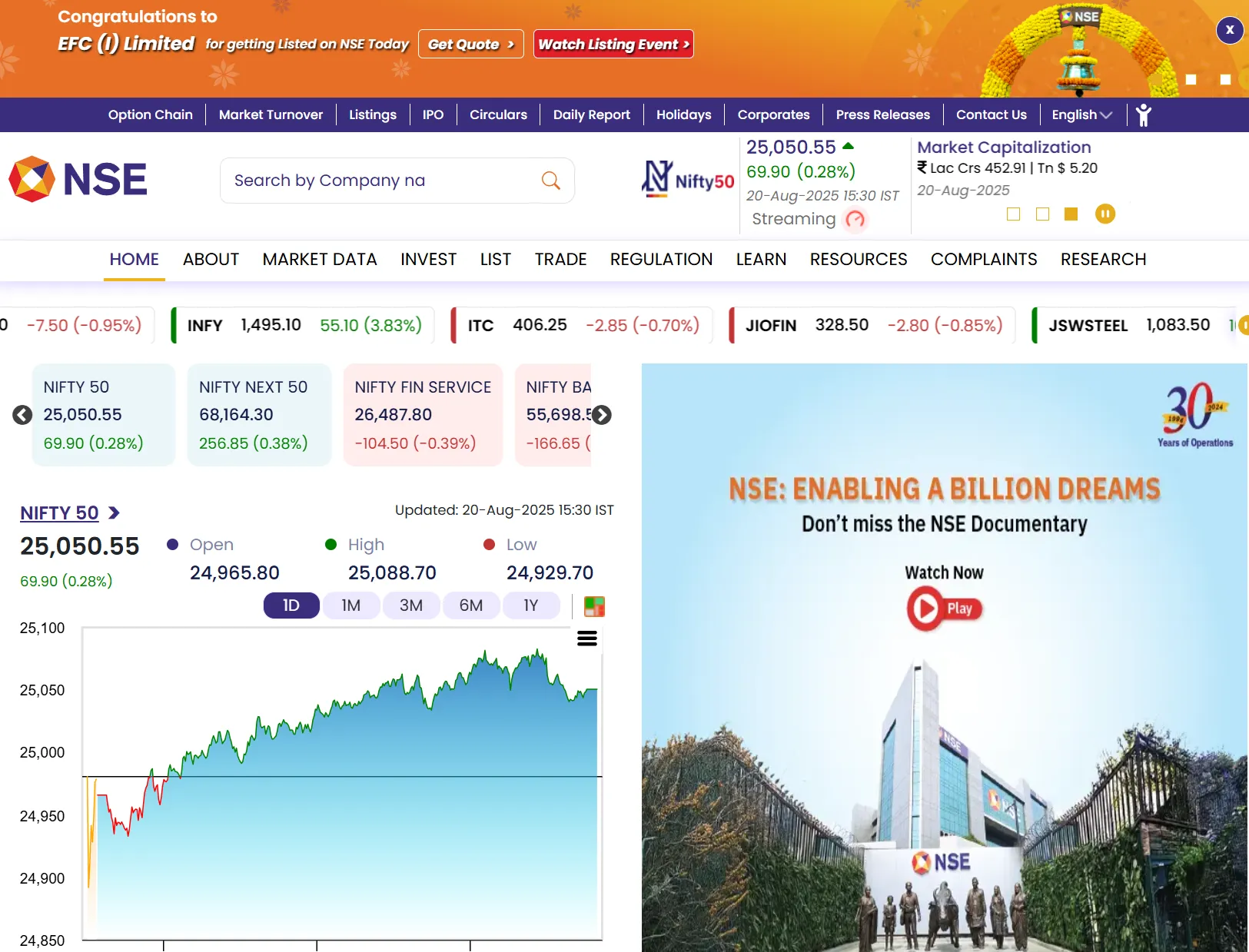
As India's first fully electronic stock exchange, the National Stock Exchange (NSE) has continuously promoted market modernization and digitization since its inception. With world-class trading volume and transaction volume, the NSE has consistently ranked among the top global derivatives and equity exchanges. Its flagship index, the NIFTY 50, has become a key indicator of India's economic and market performance and is widely used by investors worldwide.
From a brand perspective, the NSE symbolizes the reform and opening up of India's capital markets and is widely viewed as a key force in promoting transparency and internationalization in the Indian securities market. For institutional investors, the NSE's regulatory compliance and scale advantages signify market stability; for retail investors, its established brand also represents a relatively reliable investment environment.
NSE offers a wide range of trading products, including stocks, stock index futures and options, commodity futures and options, currency derivatives, bonds, and other fixed income products. Its diverse product line provides flexible options for investors of all levels:
Stock and index products are suitable for asset allocation and long-term investment;
Futures and options contracts to meet hedging and speculation needs;
Bonds and fixed-income instruments are suitable for conservative investors.
External analysts generally believe that NSE is competitive in terms of the breadth of coverage and trading volume of global trading products, especially in the derivatives market, and has become an important entry point for international capital to pay attention to the Indian market.
As a fully electronic exchange, NSE is renowned for its high-speed matching and low-latency systems. Its core trading system, built on a modern technology architecture, supports large-scale concurrent order processing, meeting the needs of institutional investors and high-frequency traders.
NSE's trading system has been rated highly for stability and transparency in third-party evaluations, making it particularly suitable for users with stringent requirements for execution speed and market depth. Furthermore, NSE provides financial institutions and developers with extensive market access and application development opportunities through data distribution and technical interfaces.
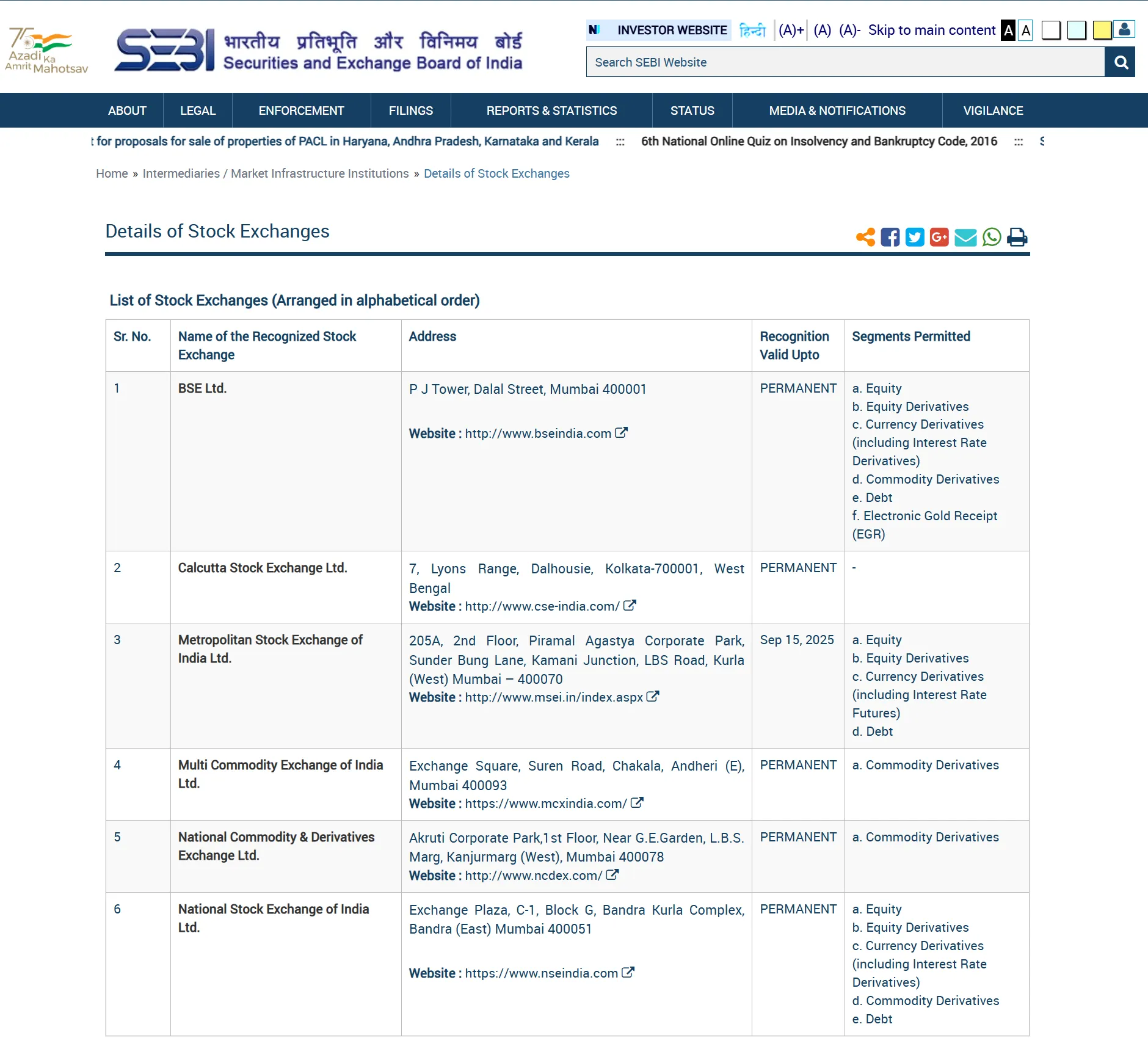
The NSE is regulated by the Securities and Exchange Board of India (SEBI) and strictly enforces investor protection mechanisms. The exchange has independent clearing and settlement companies (such as NSE Clearing Limited) to ensure secure and transparent market operations.
Internationally, the NSE is considered a low-risk trading platform due to its regulatory compliance and transparency. However, it should be noted that, as with all highly leveraged derivatives markets, investors must allocate funds appropriately based on their risk tolerance.
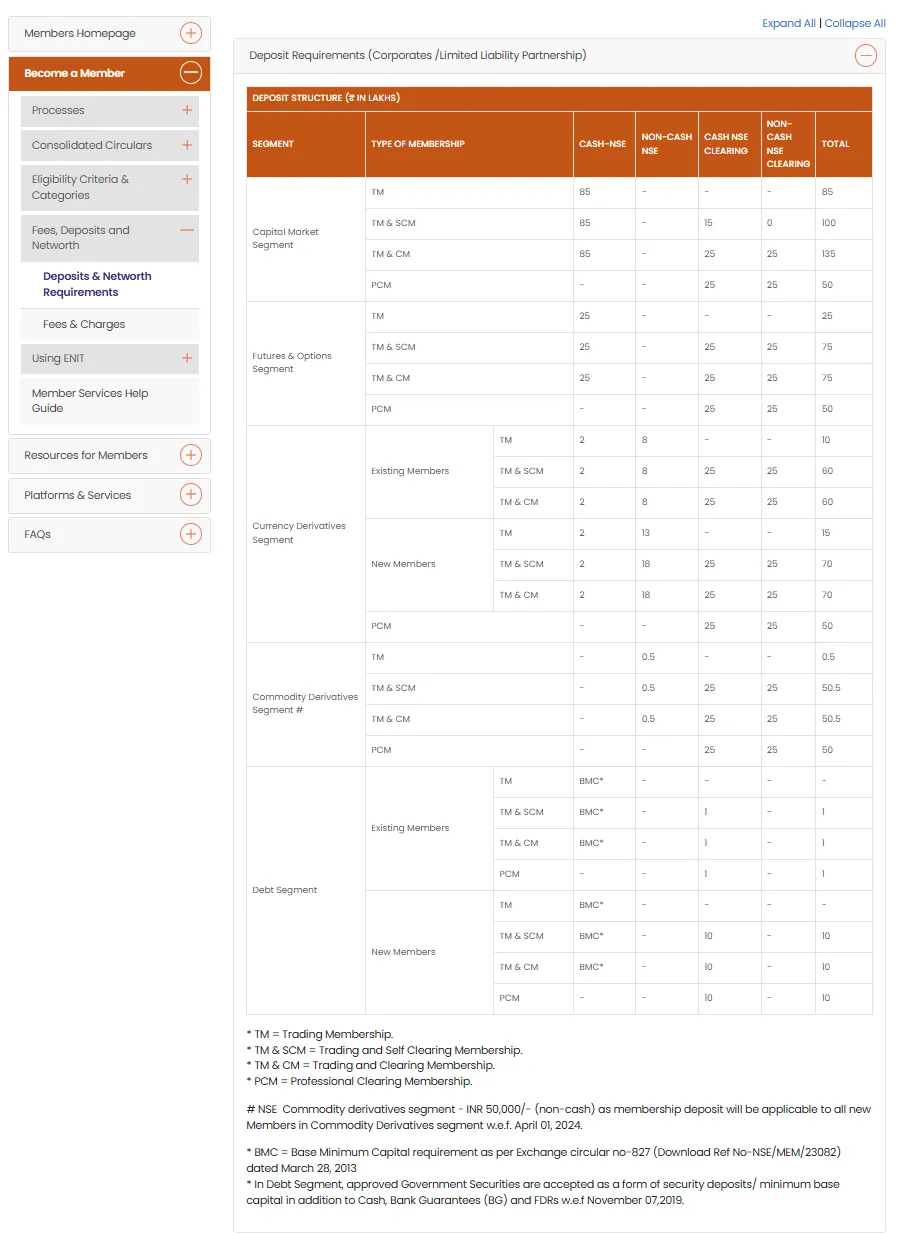
NSE offers standardized contract sizes, trading hours, and margin requirements, ensuring consistent and predictable market operations. Its leading liquidity and market depth in Asia make it highly attractive to institutional and retail investors seeking low costs and high efficiency.
NSE offers a variety of value-added services, including market research, education and training, certification courses, and industry seminars. Among them, the NSE Academy has a significant impact on investor education and professional certification, dedicated to enhancing public financial literacy.
Securities and derivatives trading is inherently high-risk and can result in partial or complete loss of funds. The NSE emphasizes risk disclosure on its website and in its marketing, reminding investors to invest rationally based on an understanding of trading mechanisms. The NSE is positioned to cater to institutional and retail clients with a solid understanding of financial markets and a focus on compliance and transparency.
From a comprehensive perspective, NSE has the following characteristics:
Strong brand influence and comprehensive regulatory compliance;
The product line is extensive, with a clear advantage in the derivatives market;
Advanced technical architecture, suitable for high-frequency and institutional investors;
Sound education and value-added services will help increase investor participation.
As the core exchange of India's capital market, NSE not only plays an important role in the local market, but has also gradually become one of the preferred platforms for international investors to enter emerging markets.
4.50
Total 3 comments ****
****NSE remains India’s largest and most trusted stock exchange, offering investors transparent access to equity, derivatives, and debt markets.
 Reply
Reply
****With advanced trading infrastructure and regulatory oversight from SEBI, NSE ensures efficiency, security, and investor protection.
Reply
****Despite global competition, NSE continues to lead innovation in digital trading platforms and financial market services.
Reply
~ There's nothing more ~
Answer:NSE is strictly regulated by the Securities and Exchange Board of India (SEBI) and provides clearing and settlement services through its subsidiary, NSE Clearing, ensuring market transparency and capital security. As one of the world's leading exchanges by trading volume, NSE offers a high level of regulatory compliance and market stability.
Answer:NSE offers a diverse range of trading products, including stocks, stock indices, futures, options, currency derivatives, commodity derivatives, and bond instruments. Its flagship index, the NIFTY 50, is widely used as a core indicator for measuring India's economic and market performance.
Answer:The NSE has become a key channel for global investors to enter the Indian market. Its electronic trading system supports efficient execution, allowing international investors to participate indirectly through partnerships with local brokerages or through global ETFs and index derivatives. However, they should be aware of India's foreign investment regulations and market risks.


