BrokerHiveXBrokerHiveXBrokerHiveX
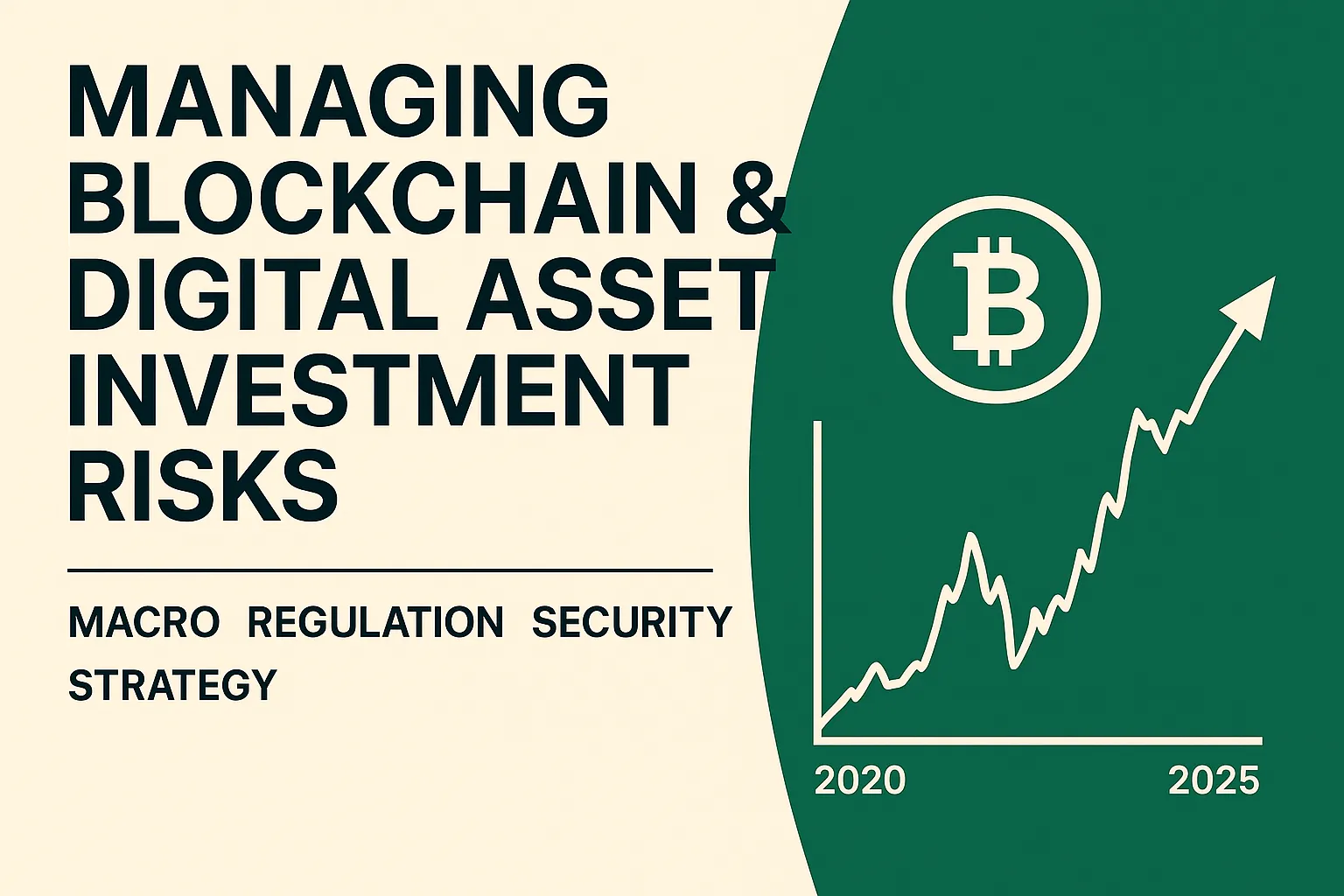
Summary:How can one scientifically allocate digital currencies like Bitcoin and Ethereum? This article comprehensively analyzes digital currency risk management and investment strategies, combining macroeconomic factors, regulatory policies, institutional investment, and on-chain data. It also provides real-world market data as of August 2025 (BTC surpasses $120,000). This article establishes an authoritative, systematic framework for investors, balancing profitability and compliance.
Interest rate environment : The Federal Reserve’s interest rate hikes in 2022-2023 caused Bitcoin to fall to $16,000; expectations of interest rate cuts in 2024-2025 drove a rebound in risky assets.
Inflation hedging logic : The "digital gold" attributes of Bitcoin and gold attract capital inflows during periods of high inflation, but the volatility is significantly higher.
US Dollar Index (DXY) Correlation : In the first half of 2025, the downward trend of DXY was highly negatively correlated with the rise of Bitcoin (correlation coefficient -0.68).
United States : SEC steps up litigation against crypto trading platforms; Digital Asset Market Structure Act is under review in Congress.
EU : MiCA regulations will take full effect in 2024, unifying the regulatory standards for stablecoins and exchanges.
Asia :
The Hong Kong SFC implements a dual-license mechanism, and by 2025 there will be 30 licensed trading platforms.
Japan's FSA introduces compliance requirements for stablecoin issuers.
Singapore's MAS continues to strengthen AML/KYC scrutiny.
👉Trend : As the world moves towards consistent regulation, the living space of unlicensed trading platforms will continue to shrink.
ETF Inflows : BlackRock’s Bitcoin spot ETF saw net inflows of $10 billion in June 2025 alone.
Custody and insurance : Anchorage and Coinbase Custody provide institutional custody and insurance services, attracting pension funds and family offices.
Retail investors vs. institutions : According to Glassnode, long-term holders (>1 year) accounted for 69% in July 2025, indicating an increase in market maturity.
| Asset Class | Annualized volatility (2020-2025) | Maximum drawdown | Sharpe Ratio | Typical risk events |
|---|---|---|---|---|
| Bitcoin (BTC) | 65% | -77% | 0.45 | FTX Crash (2023) |
| Ethereum (ETH) | 72% | -82% | 0.40 | DeFi hacking incident |
| S&P 500 | 18% | -34% | 0.75 | Epidemic Plummet (2020) |
| gold | 12% | -15% | 0.60 | US Treasury yield shock |
👉 Data shows that although digital currencies have high potential returns, their risk indicators are significantly inferior to traditional assets.
Asset Allocation :
Stable type: digital currency accounts for ≤5%
Aggressive: ≤15%, hedged with gold and bonds
Secure storage : mainly cold wallets, layered multi-signature mechanism.
Compliant platforms : Prefer SEC/FCA/MAS regulated platforms and avoid unlicensed exchanges.
Dynamic risk control : Set stop-loss and take-profit orders, combined with option hedging.
Insurance and Custody : Use institutional custody and insurance to reduce systemic risks.
Policy : The convergence of global digital currency legislation may promote the expansion of compliant ETF and derivatives markets.
Technical aspects : Layer 2, zero-knowledge proof, and cross-chain protocols will determine the new round of competition.
Funding : The entry of pension funds and sovereign funds is expected to make the market value of digital currencies exceed US$10 trillion in the next three years.
Application : Stablecoins and central bank digital currencies (CBDCs) may reshape the cross-border payment landscape.
Digital currency has gradually moved from a "speculative asset" to the "core edge of the global financial system."
However, its high volatility, high technical risks and uncertain regulation mean that it cannot replace traditional assets, but rather exists as part of "alternative asset allocation."
👉 Investors need to rely on:
Macro judgment → Compliance channels → Digital risk control → Diversified configuration → Secure custody
Only by forming a systematic risk management closed loop can we seize opportunities in the digital currency wave in the next five years.
BrokerHivex is a financial media platform that displays information from the public internet or user-uploaded content. BrokerHivex does not support any trading platform or instrument. We are not responsible for any trading disputes or losses arising from the use of this information. Please note that the information displayed on the platform may be delayed, and users should independently verify its accuracy.