BrokerHiveXBrokerHiveXBrokerHiveX
Summary:Saudi Arabia announced that it would extend its current oil production cut plan of 1 million barrels per day until the end of the fourth quarter of 2025. Oil prices rose immediately, and market concerns about the rebound in global inflation intensified. European and American central banks may face policy pressure again.
June 20, 2025 brokerhive 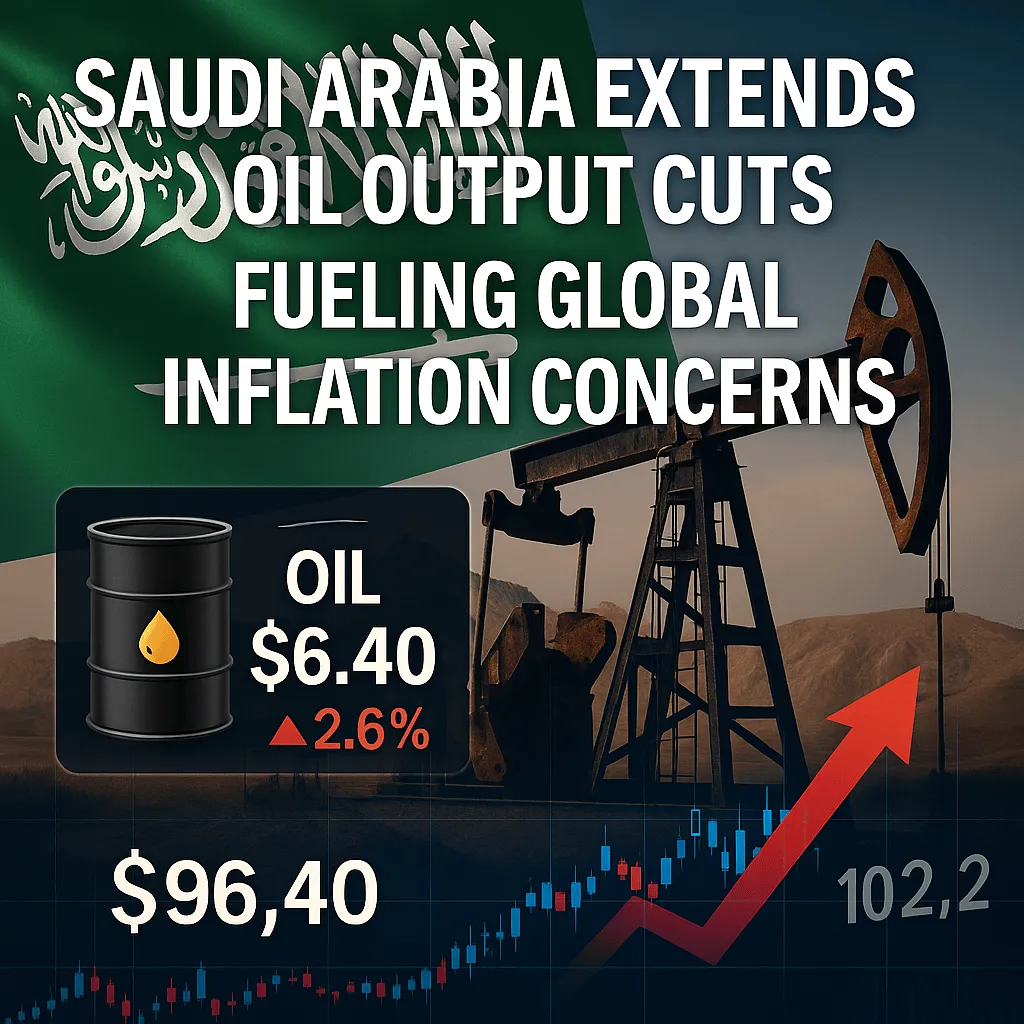
The Saudi Ministry of Energy officially announced this week that the "additional voluntary production cuts" measures launched in mid-2023 will be further extended to December 31, 2025. This production cut measures account for about 9.4% of the country's total exports, and the market generally regards it as a strategic move to support oil prices and maintain fiscal surpluses.
As soon as the statement came out, Brent crude oil rose by more than 2.6% during the session, breaking through $96.40 per barrel at one point, setting a new high since the Russia-Ukraine conflict.
"This is a clear signal from Saudi Arabia to the world: the current oil price is still not within its fiscal comfort zone." - Michael Barron, chief commodities analyst at Goldman Sachs
| index | Changes of the week |
|---|---|
| Brent Crude Oil | $96.40 / barrel (+2.6%) |
| WTI Crude Oil | $92.80 / barrel |
| US Treasury 10Y yield | Rising to 4.21% |
| US Dollar Index | Up to 105.8 |
| Gold Spot | Slightly up to $2,055/oz |
| Eurozone CPI expectations | The forecast for this year was raised to 3.1%. |
Domestic fiscal targets : Saudi Arabia needs oil prices to remain above $90 to balance budget and Vision 2030 spending
Geopolitical considerations : Faced with Iran's export growth and uncertainty in the Middle East, Saudi Arabia attempts to take the initiative in regulation
OPEC+ coordination : Although no official announcement of collective production cuts has been made, the UAE and Kuwait hinted that they may follow suit
IMF : Issued a briefing warning that continued high oil prices may delay expectations of global interest rate cuts
ECB : Will closely monitor energy-imported inflation and adjust the model in the next quarter's inflation forecast
India and China : Strongly express concerns about rising crude oil costs, or seek independent oil source transactions between China and Russia to strengthen negotiations
Oil prices have once again become an important variable in the global macroeconomic game. For central banks in Europe and the United States, which have yet to achieve their inflation targets, Saudi Arabia's move may mean that policy space will be further compressed in the coming months. For energy-dependent developing countries, soaring import costs and exchange rate fluctuations will become a double challenge.
Written by: Hassan Al-Murad , Middle East Energy Reporter Co-Editor: Emily Grant , International Macroeconomics Researcher
BrokerHivex is a financial media platform that displays information from the public internet or user-uploaded content. BrokerHivex does not support any trading platform or instrument. We are not responsible for any trading disputes or losses arising from the use of this information. Please note that the information displayed on the platform may be delayed, and users should independently verify its accuracy.