BrokerHiveXBrokerHiveXBrokerHiveX
Summary:In July 2025, global investors are experiencing an unprecedented change in asset allocation. Under the general environment of uncertainty brought by geopolitics and economic cycles, US physical assets and alternative investments have become the new favorites of capital, and the scale of capital inflow has reached a record high. This article deeply interprets the logic behind this trend and its future impact.
Michael Greene Senior financial journalist
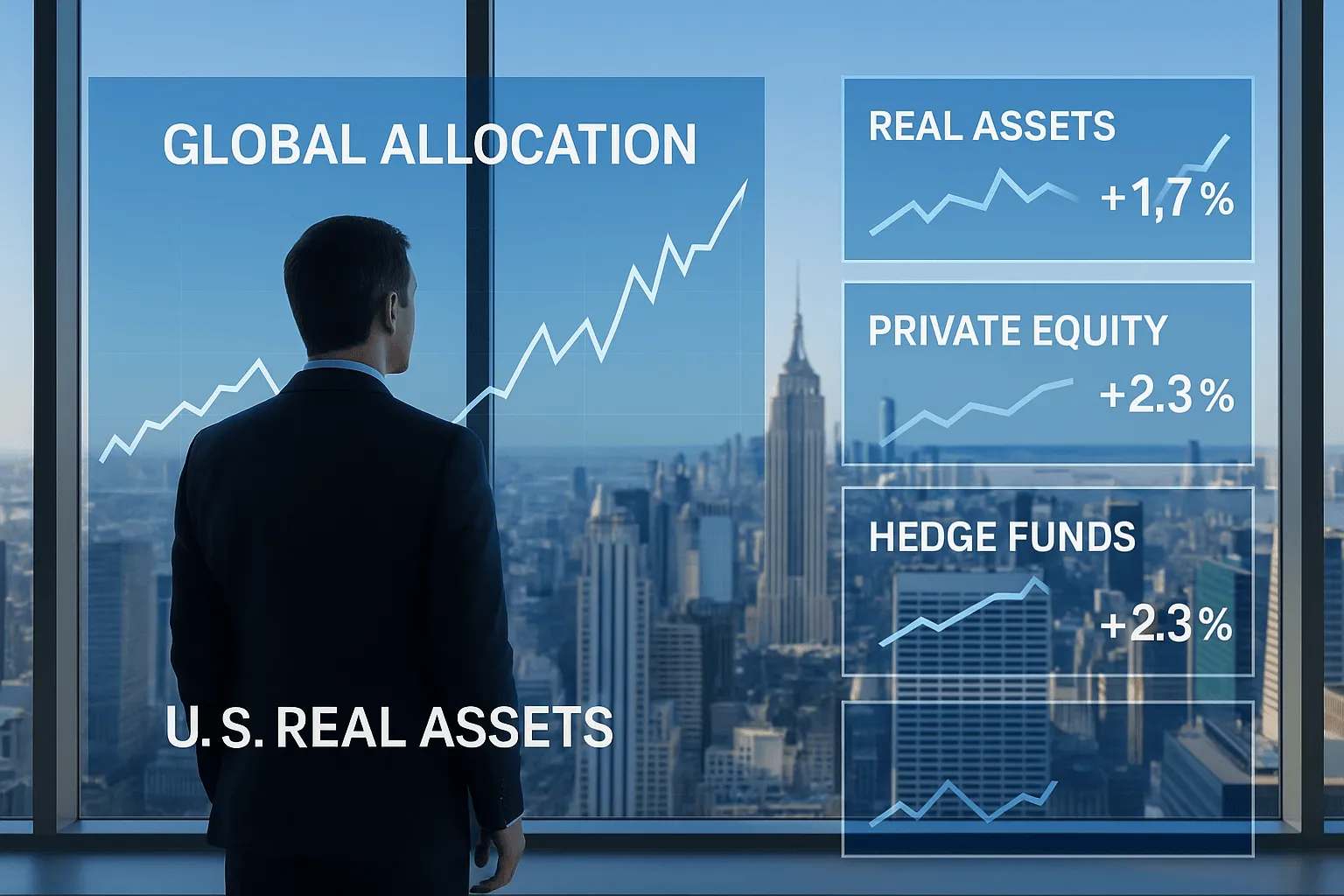
New York, July 2025 - As global stock markets hit record highs and volatility increases, a "quiet but powerful" transformation is quietly taking place. From European pension funds to Asian family offices, the world's big money is shifting from highly valued stock and bond markets to U.S. real assets - such as commercial real estate, infrastructure, and farmland - as well as new alternative investments such as private credit, venture capital, and hedge funds.
This change did not happen overnight. Over the past 18 months, global geopolitical conflicts (such as the situation between Russia and Ukraine and the US-China trade friction) and changes in inflation and interest rates have increased the risks of traditional stocks and bonds, making investment returns unpredictable.
According to BlackRock's 2025 Global Investor Survey, more than 62% of institutions plan to increase their allocation to physical assets and alternative investments in the coming year. Olivia Chen, director of BlackRock New York, said: "Investors value stable inflation-resistant cash flow and true portfolio diversification. U.S. physical assets and infrastructure have performed well globally."
The US physical asset market has shown strong resilience. Commercial real estate in cities such as Austin, Miami, and Dallas has strong rental demand and excellent returns due to technology-driven and population migration. New energy (photovoltaic, wind power, green hydrogen) infrastructure has become a hot target for capital, with both policy support and market promotion.
In 2025, farmland and forestland assets also became the "new favorite" of institutional investment, and land transactions in the Midwest of the United States hit a new high. John Everett, chief investment officer of AgriFund Partners, said: "Farmland is a natural inflation hedge tool that can both maintain and increase value while improving food security."
What were once niche areas—venture capital, private equity, and hedge funds—have now become mainstream choices for global investors seeking high returns and low correlations. Private credit funds in the United States will explode in 2025, and companies prefer non-bank financing channels in the post-epidemic era.
According to Preqin data, the size of global private equity market assets under management exceeded US$15 trillion this year, of which North American capital flows accounted for more than 60%. Innovations in financial technology and digital infrastructure have also greatly lowered the threshold for high-net-worth and some mass investors to participate, further intensifying market vitality.
Despite the enthusiasm of funds, physical and alternative investments also have their own risks, such as poor liquidity, uncertain valuation, complex compliance requirements and high fees. Experts suggest that investors must do due diligence, maintain a long-term perspective, and avoid blindly chasing high prices.
Michael Goldman, senior strategist at Citi Private Bank, reminded: "There is no risk-free investment in the world. At present, inflation is unstable and the economic cycle is shortening. It is reasonable to allocate some hard assets and alternative investments, but they must be scientifically diversified and dynamically managed."
This huge change in asset allocation is reshaping the global financial landscape. The strengthening of the US dollar, the surge in US real estate demand, and the prosperity of the alternative investment ecosystem have made the United States once again a "safe haven" for global capital.
Looking ahead, analysts generally believe that institutional portfolios will become more international and diversified, the weights of physical and private assets will increase, and the global financial system is expected to be more stable, but it will also bring about a certain liquidity contraction.
BrokerHivex is a financial media platform that displays information from the public internet or user-uploaded content. BrokerHivex does not support any trading platform or instrument. We are not responsible for any trading disputes or losses arising from the use of this information. Please note that the information displayed on the platform may be delayed, and users should independently verify its accuracy.