BrokerHiveXBrokerHiveXBrokerHiveX
Summary:In July 2025, the global green bond issuance exceeded the $1 trillion mark for the first time. As governments and institutional investors continue to increase their investment in ESG projects, the explosive growth of the green bond market is inevitable. Analysts believe that this marks the transition of sustainable finance from an idea to the mainstream, bringing far-reaching impacts to the global capital market.
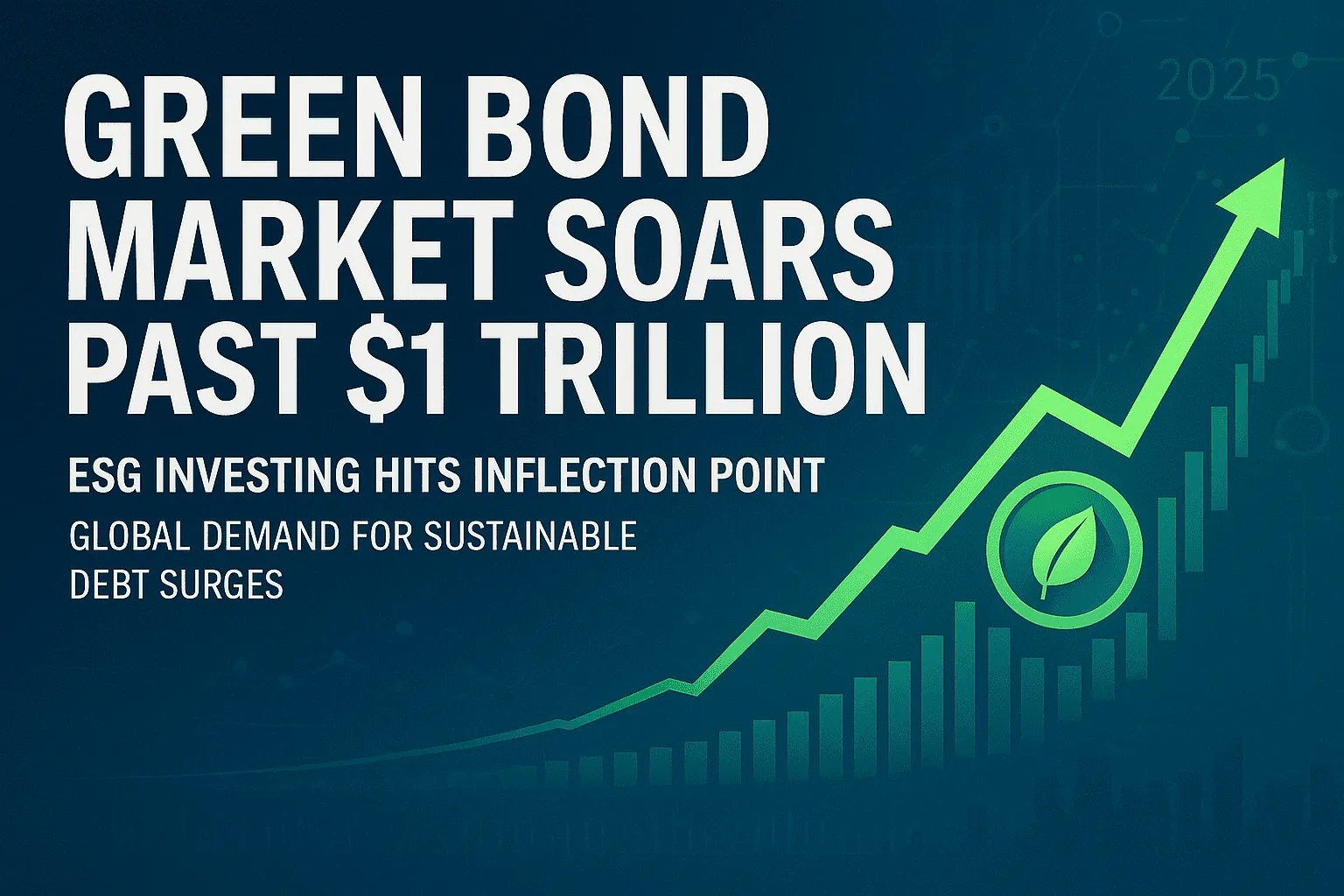
London/New York, July 10, 2025 - According to the latest report of the International Capital Market Association (ICMA), the total issuance of global green bonds reached US$550 billion in the first half of 2025, pushing the cumulative scale to exceed US$1 trillion. This milestone not only demonstrates the remarkable results of sustainable investment, but also indicates that ESG (environmental, social and governance) investment is becoming a mainstream allocation option.
At the government policy level, the EU Green Deal and the US Clean Energy Act provide strong support. According to data from the European Commission, the issuance of green bonds by EU member states has increased by 42% year-on-year since 2024. The US Treasury also issued its first federal green bond in May this year, raising funds for investment in renewable energy projects such as wind power and solar energy.
At the same time, demand from institutional investors is high. The latest announcement from BlackRock, the world's largest asset management company, pointed out that the allocation ratio of green bonds in its ESG funds has increased from 12% last year to 18% this year. Maria Hernandez, the company's global head of fixed income, said: "Green bonds are becoming a core asset in investment portfolios, with both stable returns and social impact."
Traditional sovereign funds and pension funds are still the main players in the market, accounting for about 45% of the current green bond demand. It is worth noting that the participation of family offices and high-net-worth individual investors has increased significantly, contributing more than 20% of the new demand. Asian markets such as China, Taiwan and South Korea also show strong issuance momentum.
In addition, companies are enthusiastic about issuing green bonds. As of early July, many world-renowned companies including Apple, WeBank, Toyota and Unilever have joined the ranks of green financing, raising more than US$15 billion. Most corporate green bonds are puttable or linked to sustainable development goals, and their interest rates are relatively favorable compared to traditional bonds.
Despite the promising market prospects, green bonds also face risks and compliance challenges. Regulators are highly vigilant about the phenomenon of "greenwashing" and require issuers to provide third-party certification and accept continuous disclosure. Peter Douglas, executive director of ICMA, warned: "Investors need to pay attention to whether the issuance projects truly meet green standards to prevent the risk of not living up to the name."
Credit rating agencies are also exploring ESG rating models to help investors identify high-quality targets. However, the lack of internationally unified standards for rating methodologies leads to differences in ratings given by different agencies, making it more difficult for investors to make decisions.
Looking ahead to the second half of the year and the next few years, the international sustainable finance market is expected to continue to maintain rapid growth. Morgan Stanley predicts that by 2030, the global green bond market will grow to $3 trillion, with an average annual compound growth rate of more than 20%. Global capital will flow more to clean energy, green infrastructure and climate adaptation projects to help achieve carbon neutrality goals.
John Smith concluded: "The explosion of green bonds is an inevitable choice for the global economy to transform towards sustainable development. Driven by policies, markets and technologies, ESG investment will move from the periphery to the center, opening up new opportunities for investors."
John Smith, Global Financial Observer
BrokerHivex is a financial media platform that displays information from the public internet or user-uploaded content. BrokerHivex does not support any trading platform or instrument. We are not responsible for any trading disputes or losses arising from the use of this information. Please note that the information displayed on the platform may be delayed, and users should independently verify its accuracy.