BrokerHiveXBrokerHiveXBrokerHiveX
Summary:US President Trump and Philippine President Marcos reached a major trade agreement, imposing a 19% tariff on Philippine goods starting August 1st. The Philippines will implement zero tariffs on all US goods and deepen military cooperation (Sin Media). The agreement is expected to impact Philippine export GDP by 0.2-0.4 percentage points, threaten 150,000 jobs, and provide limited short-term benefits to the US. #USPhilippinesTrade #TrumpTariffs #PhilippineExports #ASEANEconomy #RegionalGame
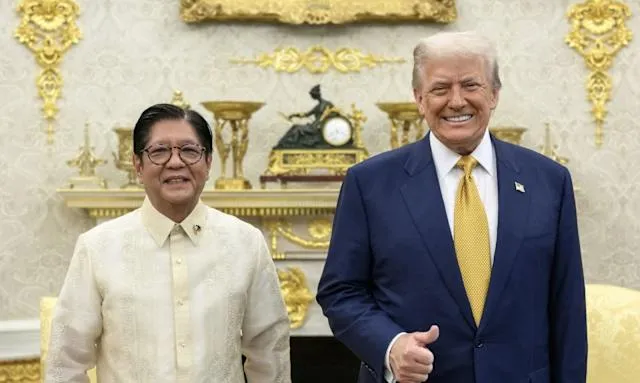
Following their meeting at the White House, US President Trump and Philippine President Ferdinand Marcos Jr. announced the official conclusion of a new US-Philippines trade agreement. Effective August 1st, the US will impose a 19% tariff on Philippine imports, slightly lower than the initially announced 20% but still higher than the 17% reciprocal tariff proposed in April. In exchange, the Philippines pledged to implement zero tariffs on US goods, open its market, and deepen bilateral military cooperation.
Trump emphasized on social media that this was a "fair agreement," stating that "the Philippines has fully opened its market to the United States, and the 19% tariff imposed by the United States is a reasonable and necessary adjustment." According to data from the Office of the United States Trade Representative (USTR), total bilateral trade between the United States and the Philippines reached $23.5 billion in 2024, with a $4.9 billion trade deficit for the United States, a 21.8% year-over-year increase. Faced with this widening trade deficit, the Trump administration opted for high tariffs to force the Philippines to renegotiate.
The Philippines has yet to officially respond, but economists have already predicted the impact. Nikkei Asia quoted John Paolo Rivera, a senior researcher at the Philippine National Institute for Development Studies, as saying the agreement could lead to a 0.2-0.4 percentage point reduction in Philippine GDP and threaten 150,000 export-related jobs.
He analyzed that the competitiveness of Philippine electronics, apparel, and processed food exports will be weakened, supply chain costs such as semiconductors and wire materials will rise, and shipment delays may further erode market share. A 5% to 15% price increase for US products could also weaken consumer demand.
Trump addressed security issues after the meeting, emphasizing that the US and the Philippines will "work together to deepen military cooperation," calling the Philippines an important strategic partner. Although he avoided using the term "ironclad," as he has in the past, the discussion clearly addressed the balance of regional security.
This agreement makes the Philippines the third ASEAN country to reach an agreement with the US, following Vietnam (accepting 20% tariffs) and Indonesia (accepting 19% tariffs). Analysts believe that this high-pressure bilateral negotiation approach will force regional countries to face complex pressures to choose sides between the US and China, potentially leading to a trend of diversion and re-integration of Southeast Asian supply chains.

In the short term, the US has achieved political and strategic results in negotiations, which the market interprets as further strengthening US-Philippine relations, with some investors optimistic about the benefits for US military industrial, energy, and agricultural products companies. However, in the long term, the economic benefits of the US imposing high tariffs on the Philippines are limited, and may even undermine the US's trade credibility in ASEAN, prompting more countries to turn to regional integration or cooperation with China.
The Philippine market and related export chain companies are facing significant pressure. Investors are becoming more cautious about the Philippine economic outlook, fearing that over-reliance on the US market will lead to structural risks, potentially exacerbating capital outflows and exchange rate fluctuations.
Want to be the first to grasp global market trends and investment opportunities? Follow us at BrokerHivex for the latest in-depth analysis and real-time information!
BrokerHivex is a financial media platform that displays information from the public internet or user-uploaded content. BrokerHivex does not support any trading platform or instrument. We are not responsible for any trading disputes or losses arising from the use of this information. Please note that the information displayed on the platform may be delayed, and users should independently verify its accuracy.