BrokerHiveXBrokerHiveXBrokerHiveX
Summary:Tesla has officially launched its Robotaxi pilot program in the Bay Area, California, but safety drivers are still required to supervise the vehicles due to California regulations. This is a significant step forward in the commercialization of autonomous driving, but short-term policy and technical constraints remain. Long-term, Robotaxi will revolutionize urban mobility and reshape the automotive, energy, and capital markets. #TeslaRobotaxi #Self-DrivingTaxi #CaliforniaRegulation #FutureMobility #SmartTransportation
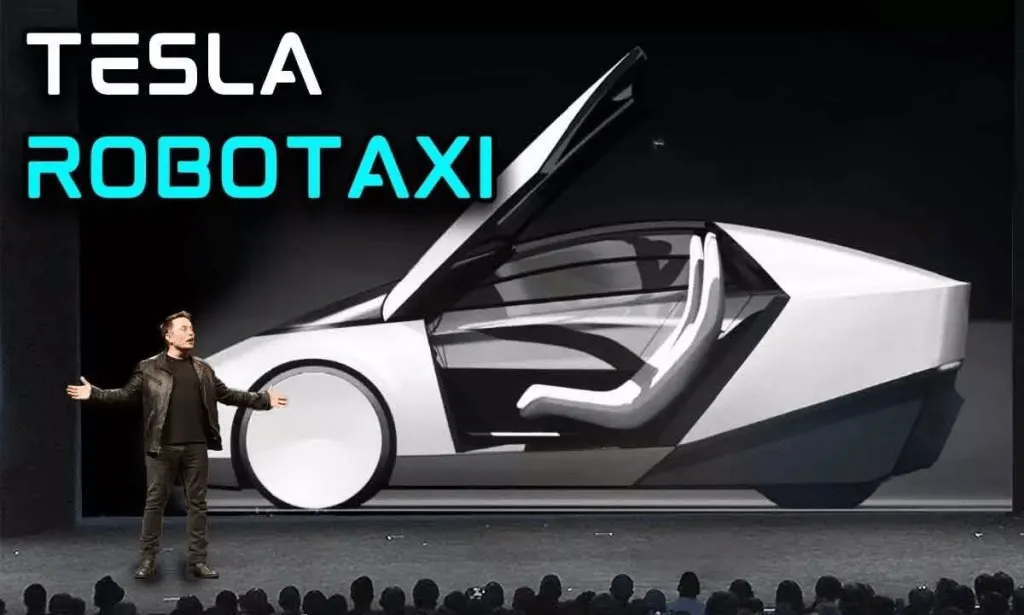
Tesla has announced the launch of its self-driving taxi service in the California Bay Area. While fully autonomous vehicles have already been implemented in Austin, Texas, California's Public Utilities Commission (CPUC) mandates that a safety driver be present. The service is currently available primarily to Tesla employees and their families, operating as a closed pilot program. Musk previously stated that the company is working to obtain regulatory approvals in multiple regions to gradually ease restrictions. This step marks the commercialization of Robotaxi vehicles entering the practical implementation phase, but widespread adoption remains some distance away.
This incident reflects the tension between regulation and technology commercialization. California's autonomous driving regulations are known for being strict, requiring CPUC approval for any commercial service. Safety and public trust remain key factors in the rollout of autonomous driving. The differing regulatory environments in Texas and California highlight the impact of diverging local policies on the pace of Robotaxi deployment. Musk hopes to gradually achieve regulatory breakthroughs in different states, fostering regionalized rollout and ultimately moving toward full openness.
From a future market perspective, Robotaxi has the potential to revolutionize urban mobility. Once implemented on a large scale, shared mobility will shift from a "ride-hailing" model to one characterized by autonomous driving and AI-powered dispatching. Traditional taxi and ride-hailing drivers will face structural disruptions, and urban transportation, parking requirements, and insurance models will all be redefined. Simultaneously, cars will gradually shift from consumer goods to mobility service assets, reshaping the automotive industry chain, energy supply system, and intelligent transportation infrastructure. More importantly, Robotaxi will propel Tesla's transformation from a "car sales company" to an "AI mobility platform and energy network operator," potentially leading to a significant shift in the capital market's valuation logic.
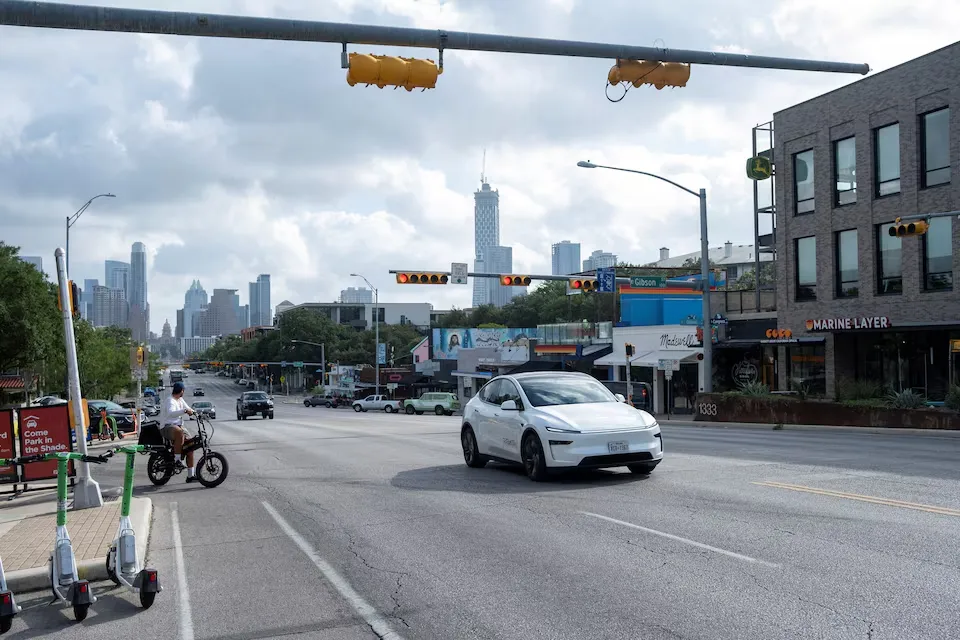
A Tesla self-driving taxi drives along South Congress Avenue in Austin, Texas, U.S., on June 22, 2025.
However, in the short term, Robotaxi still faces uncertainty. Policy remains the biggest variable, and California's strict regulations mean that fully autonomous driving services will be difficult to launch quickly in the short term. Any autonomous driving accident could trigger a reversal of public opinion and policy, necessitating a safety verification period. Furthermore, competitors like Waymo and Cruise have been developing autonomous driving for years, and Tesla may not dominate the market, so the market share structure remains to be seen. Therefore, 2025 is likely to be a period of technical and policy verification for Robotaxi, with the window for large-scale commercialization likely to gradually open after 2026-2027.
Investors are divided. Optimists see this as the beginning of Tesla's entry into a new phase of "AI + mobility services," believing that Robotaxi is the next trillion-dollar market. Cautious investors, however, worry about regulatory lags and technical safety bottlenecks, believing it will be difficult to generate significant returns in the short term and that stock price volatility will increase. Overall sentiment appears rationally optimistic, with investors betting on medium- to long-term value rather than short-term speculation.
The launch of Tesla's Robotaxi in California is both a significant step forward in the commercialization of autonomous driving and a prelude to the future reshaping of urban transportation. It could usher in a new era of mobility, but it could also face repeated challenges in policy and technology. Over the next few years, this "autonomous driving race" will be one of the most crucial battles between the capital market and tech giants.
Want to be the first to grasp global market trends and investment opportunities? Follow us on BrokerHiveX for the latest in-depth analysis and real-time information!
BrokerHivex is a financial media platform that displays information from the public internet or user-uploaded content. BrokerHivex does not support any trading platform or instrument. We are not responsible for any trading disputes or losses arising from the use of this information. Please note that the information displayed on the platform may be delayed, and users should independently verify its accuracy.