BrokerHiveXBrokerHiveXBrokerHiveX
Summary:HSBC Holdings' pre-tax profit plummeted 26% year-on-year to US$15.8 billion in the first half of 2025, far below the market expectation of US$16.5 billion, mainly due to the impairment of China Bank of Communications' investment and the increase in non-performing loans in Hong Kong real estate. Although corporate and institutional banking business continues to grow, HSBC faces the triple challenges of profit pressure, stock price correction and strategic transformation against the backdrop of falling global interest rates and rising geopolitical risks. This puts pressure on the valuation and market confidence of the entire banking sector, especially financial assets in Hong Kong. #HSBCBank #ChinaRisk #Real Estate Crisis #Stock Price Correction #Financial Stock Warning
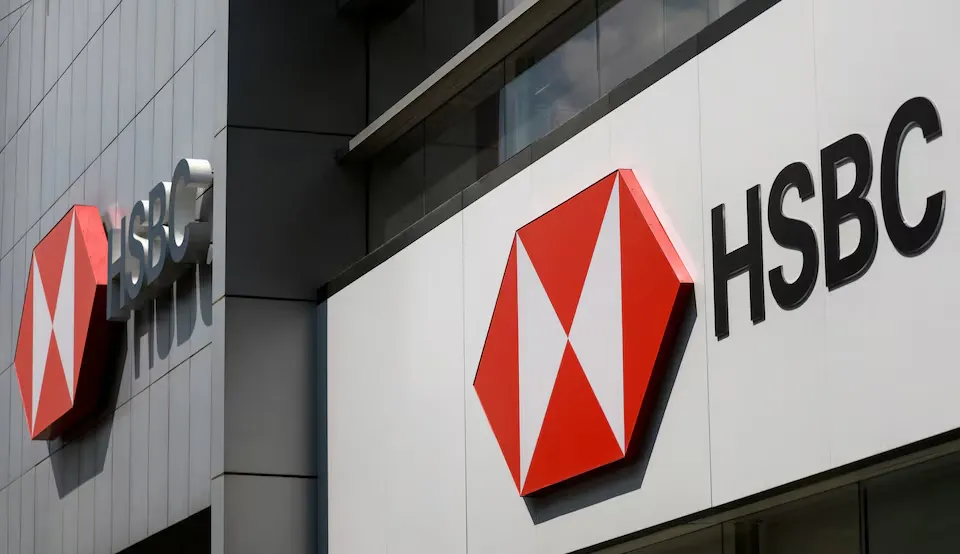
On July 30, 2025, HSBC Holdings (HSBC) announced a pre-tax profit of US$15.8 billion in the first half of the year, a year-on-year decline of 26%. This was not only lower than the level of the same period last year, but also lower than the average forecast of analysts surveyed by Bloomberg (US$16.5 billion).
The decline was mainly due to two blows: first, a $2.1 billion impairment of investment in China Communications Bank, of which $1.1 billion came from equity dilution losses; second, the weakness in Hong Kong's real estate market caused credit losses to increase by $900 million.
As a representative bank that "bets on Asia", HSBC has been continuously reducing its holdings in European and American retail businesses in recent years, shifting its growth focus eastward. This decline in performance reflects that its "China strategy" faces structural risk challenges.
Citi analysts pointed out that the continued decline in Hong Kong's real estate market could lead to a further deterioration in banks' asset quality and increased provisioning pressure in the future. With the collapse of some small and medium-sized developers, the banking system's non-performing loan exposure has increased, causing investors to reassess the overall valuation of bank stocks, including HSBC.
Dragged down by the news, HSBC's Hong Kong-listed share price fell over 3% in the afternoon of the 30th, leading to a slight weakening of the Hang Seng Bank Index. This unease about the earnings outlook may lead investors to prefer safe-haven assets in the short term and maintain a cautious attitude towards the banking sector.
Despite earnings pressure, HSBC announced a new round of share buybacks totaling $3 billion and an interim dividend of 10 cents per share in an attempt to stabilize market confidence. However, faced with multiple variables such as expectations of falling interest rates, intensified US-China trade frictions, and unresolved risks in China's real estate market, investors are more focused on banks' medium- and long-term profitability model reconstruction and capital allocation optimization.
HSBC is currently seeking a new chairman to replace Mark Tucker, who is about to join AIA, while Group CEO George Elkhedri is also pushing for a review of its retail business in markets such as Australia, Indonesia and Sri Lanka, demonstrating its intention to adjust to a more "streamlined and institutionalized" strategy.
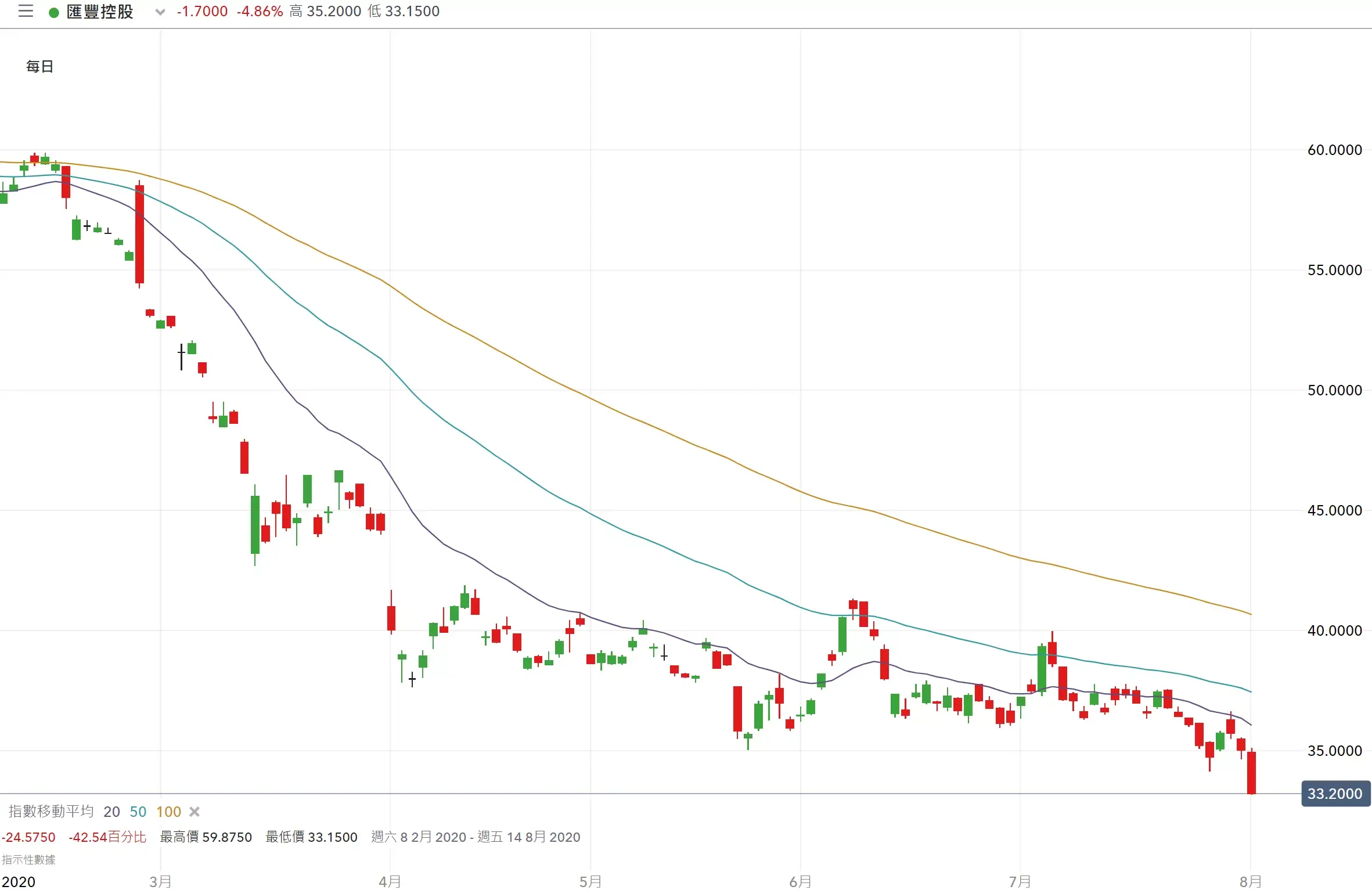
HSBC continued to fall by nearly 5% after the release of its financial report today.
Against the backdrop of China's current structural economic slowdown and a deep real estate market correction, financial stocks heavily invested in Chinese banks or real estate-related assets continue to face valuation pressures in the short term. HSBC, the foreign bank with the deepest roots in the Chinese market, has become a bellwether, reflecting how the "Asian growth story" is shifting from a bright spot to a source of risk.
Investors should focus on the following points:
Exposure structure of Chinese banking stocks: especially indirect or direct exposure to Chinese city commercial banks, policy banks, or real estate companies;
Credit provisioning and capital adequacy dynamics: the pace of asset quality adjustments under earnings pressure;
The impact of changes in the interest rate cycle on net interest margin (NIM) and asset repricing ability;
Whether the dividend and repurchase strategy is sustainable and whether there are signs of "using capital to stabilize the appearance".
For investors with a more defensive allocation, they can appropriately reduce the weight of banks with medium and large-scale risk exposure, and instead focus on international banks with more balanced asset structures and diversified regional exposure, or financial technology and insurance companies with stable cash flow and anti-cyclical capabilities.
With the release of HSBC's earnings, the market is once again focused on the impact of China's risks on multinational banks. From exposure to Chinese capital, the impact of real estate chains, to global business adjustments, financial stocks are no longer a single valuation game, but a concentrated reflection of macro risks.
Want to be the first to grasp global market trends and investment opportunities? Follow us on BrokerHiveX for the latest in-depth analysis and real-time information!
BrokerHivex is a financial media platform that displays information from the public internet or user-uploaded content. BrokerHivex does not support any trading platform or instrument. We are not responsible for any trading disputes or losses arising from the use of this information. Please note that the information displayed on the platform may be delayed, and users should independently verify its accuracy.