BrokerHiveXBrokerHiveXBrokerHiveX
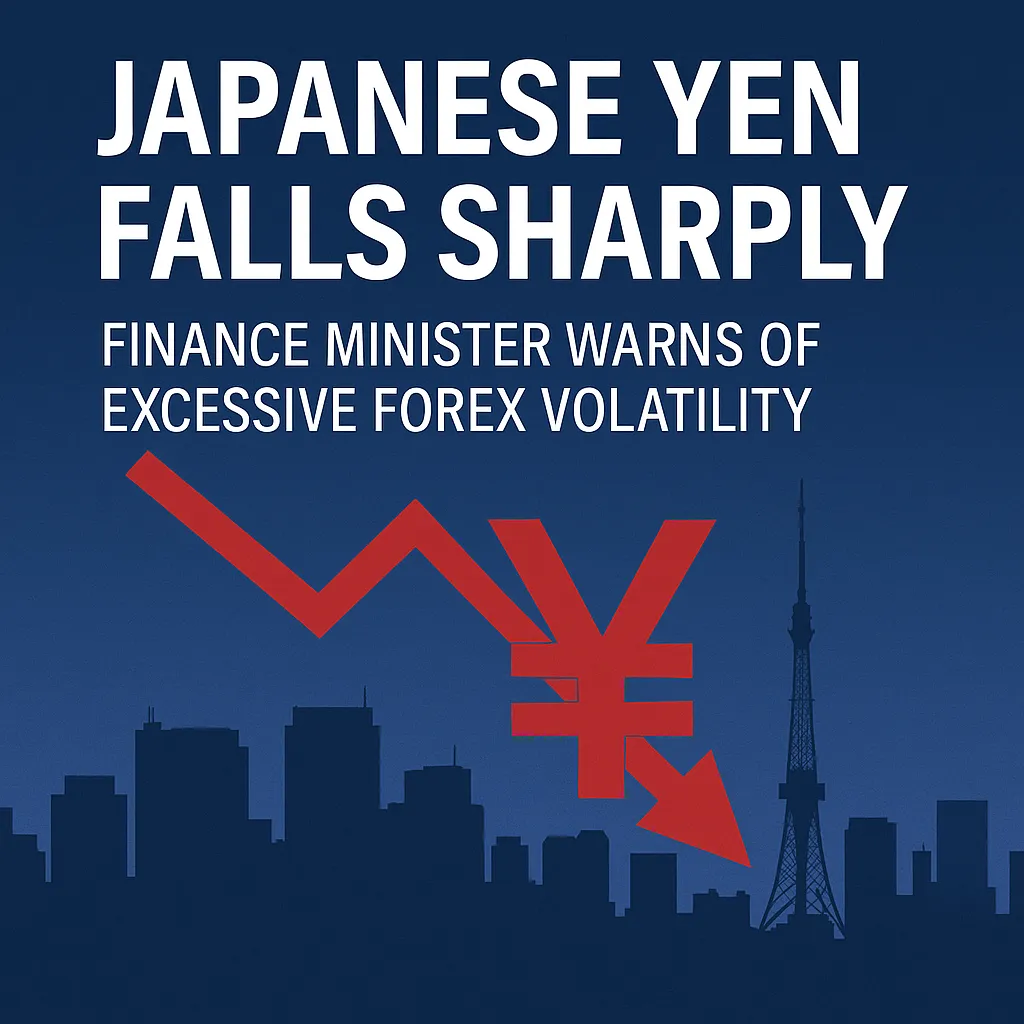
Summary:The yen fell to a two-month low against the dollar, prompting Japan's finance minister to warn of "excessive volatility" in the foreign exchange market. Analysts expect the yen to continue weakening due to diverging monetary policies between Japan and the United States, sparking global market concerns and heightened investment risks.
Author: BrokerHiveX Financial Editorial Department
On October 7, 2025, Japanese Finance Minister Shunichi Suzuki held a press conference in Tokyo, warning that the foreign exchange market has been "excessively volatile" recently and that the government will closely monitor exchange rate fluctuations and take intervention measures if necessary.
The yen exchange rate against the US dollar fell to 150.62 yen/dollar , the lowest point in nearly two months; the exchange rate against the euro hit 176.35 yen/euro , a record high.
“The exchange rate should reflect economic fundamentals and should not experience irrational fluctuations. The government will remain highly vigilant.”
—Katsunobu Kato, Japanese Finance Minister
The market generally believes that the Japanese government's statement is laying the groundwork for potential foreign exchange market intervention . Previously, the Bank of Japan has repeatedly stated that it will maintain its ultra-loose policy, and this "policy divergence" is driving continued pressure on the yen.
| factor | illustrate | Impact direction |
|---|---|---|
| Monetary policy divergence | The Federal Reserve maintains high interest rates, while the Bank of Japan still adheres to negative or zero interest rate policies | Expanding the US dollar's yield advantage, funds flow to US assets |
| Rising energy import costs | Japan is highly dependent on imported energy, and rising oil prices are widening its trade deficit. | Increased demand for foreign exchange pushes down the yen exchange rate |
| Capital Outflow and Carry Trade | Investors are shifting funds to overseas markets with higher yields | Accelerating the depreciation trend of the yen |
Economists point out that if the United States delays its interest rate cut, Japan's policy space will be further limited, which may cause the yen to continue to weaken in the coming weeks.
The Tokyo Stock Exchange (TSE) index fell slightly by 0.5% after the exchange rate news was released, with export companies performing relatively resiliently.
The US dollar index (DXY) rose to 106.8, indicating that funds are still flowing into US dollar assets.
Several investment banks (such as Morgan Stanley, UBS, and Nomura) predict that if the yen breaks through the 151 mark, the Bank of Japan may intervene through "verbal intervention" or directly enter the market.
Bloomberg reported that Japan's Ministry of Finance has been in communication with major banks and will take "coordinated intervention" if necessary.
High volatility means more short-term trading opportunities, but also greater risks. Many forex brokers (such as OANDA , IG , and Pepperstone ) have reminded clients to set stop-loss orders and margin protection.
Exporting companies (such as Toyota and Sony) benefit from the devaluation and their export competitiveness is enhanced.
Importing companies (especially those in the energy and chemical industries) are facing pressure from rising costs.
The weakening of the yen will push up the prices of imported goods, or indirectly affect Japan's CPI, putting the Bank of Japan in a policy dilemma.
| Risk Type | illustrate | Investor response strategies |
|---|---|---|
| Exchange rate risk | Increased volatility leads to higher margin requirements | Pay attention to risk ratio and automatic liquidation mechanism |
| Policy intervention risks | Sudden intervention by the government or central bank causes a sharp reversal | Avoid high leverage positions |
| International capital flow risk | Emerging markets may experience capital outflows during a strong dollar cycle | Diversify your currency portfolio |
Despite the Japanese government's intervention signals, the yen's weakness is unlikely to be reversed until monetary policy is tightened. Analysts generally believe that unless the Bank of Japan changes its yield curve control (YCC) policy, the yen is likely to remain in the 145-155 range for a long time.
In the coming weeks, the market focus will be on the following three directions:
Whether the Federal Reserve will delay its interest rate cut plans;
Whether the Bank of Japan will adjust the wording of its policy statement;
Whether there is substantial foreign exchange intervention.
BrokerHivex is a financial media platform that displays information from the public internet or user-uploaded content. BrokerHivex does not support any trading platform or instrument. We are not responsible for any trading disputes or losses arising from the use of this information. Please note that the information displayed on the platform may be delayed, and users should independently verify its accuracy.