 BrokerHiveXBrokerHiveXBrokerHiveX
Summary:After recently reaching record highs, the three major US stock indices and gold prices are showing signs of a pullback. Inflation data, interest rate outlooks, and geopolitical risks are driving investors to reassess their risk exposure. This article analyzes the underlying logic, key drivers, and far-reaching implications for future global asset allocation.
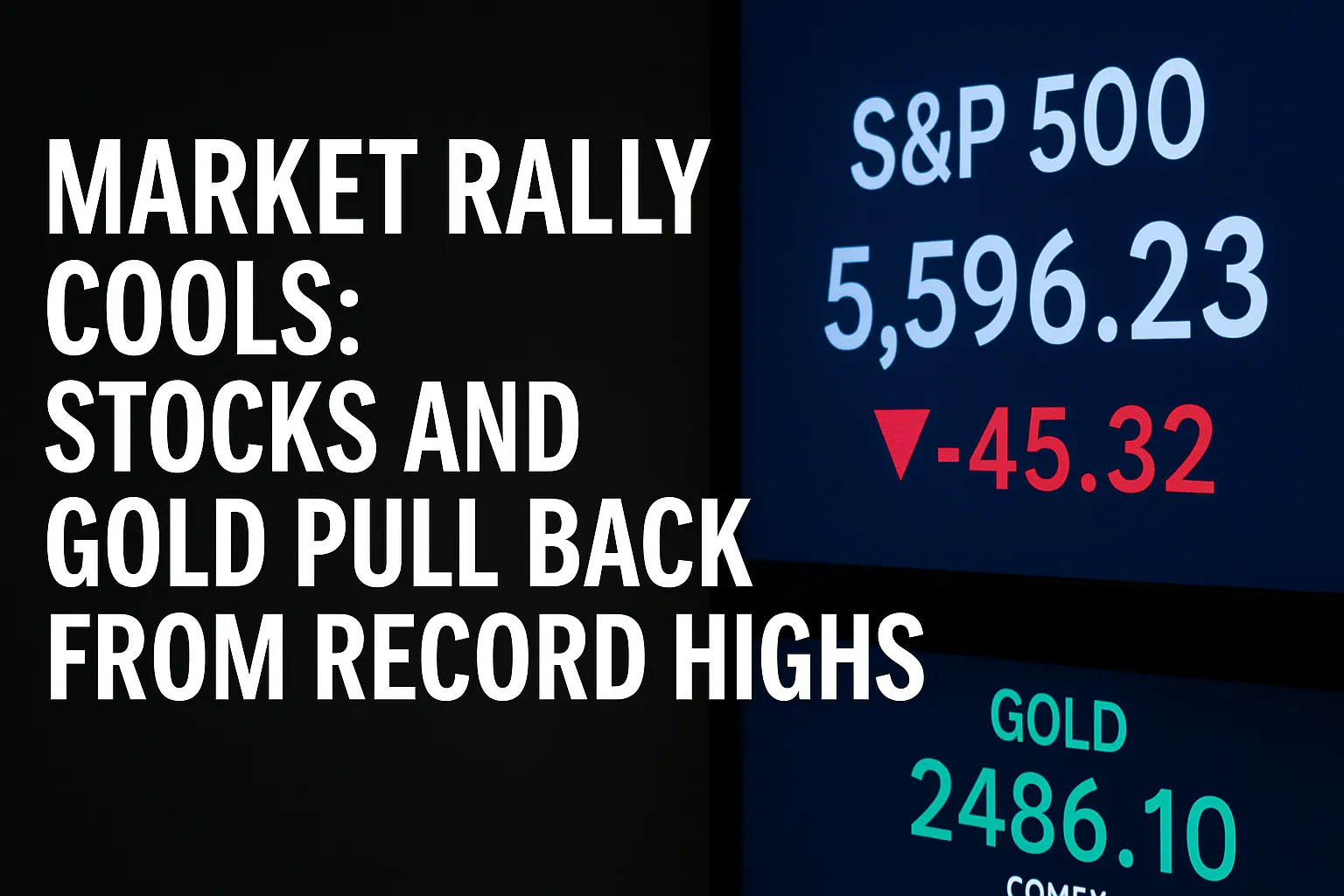
In early October 2025, Wall Street experienced several months of strong gains, with the S&P 500 index reaching a record high. However, with the release of the latest inflation data and fluctuations in Federal Reserve policy expectations, market sentiment began to cool significantly.
📉S &P 500 Index : Down about 3.2% from a high of 5,630 points
📉Nasdaq Index : Retraced about 4% from the high of 18,200 points
📉Gold spot price : Falling from $2,580/oz to $2,480/oz
📉 US Dollar Index (DXY) : Falling from around 107 to 105.8
This synchronized pullback reflects a shift in investors' mentality from "full risk appetite" to "cautious rebalancing."
CNN Markets reports
🔗 Bloomberg Global Market Data
The latest US CPI data showed that core inflation rose by 0.4% month-on-month , higher than the market expectation of 0.3%. This has significantly cooled market expectations of an early rate cut by the Federal Reserve.
Investors began to reassess valuation levels and future profitability, with highly valued growth stocks being the first to be sold off.
| time | CPI year-on-year | CPI month-on-month | Market expectations | Actual results |
|---|---|---|---|---|
| August 2025 | 2.8% | 0.3% | 0.3% | ✅ 0.3% |
| September 2025 | 3.1% | 0.4% | 0.3% | ⚠️ 0.4% |
🔗U.S. Bureau of Labor Statistics CPI report
Although the Federal Reserve had previously hinted that it might start cutting interest rates before the end of 2025, recent inflation data and strong employment data have led the market to reprice the policy path.
The CME FedWatch tool shows that the market's probability of a rate cut in December 2025 has dropped from 72% to 48% .
📊 Investor repricing results in:
Long-term U.S. Treasury yields rose to 4.78%, a near 18-month high.
Profit-taking in the high-growth technology sector
Gold falls on stronger dollar
Renewed tensions in the Middle East and the increased risk of conflict in Eastern Europe have led to a rise in risk aversion. While this is usually bullish for gold, the metal has been unable to maintain its upward trend and has instead experienced a correction due to uncertainty surrounding the Federal Reserve's policy and a stronger dollar.
| Risk Events | time | Impact on the market |
|---|---|---|
| Escalation in the Middle East | October 2025 | Oil prices briefly rose, and stock market volatility increased. |
| EU energy crisis | September 2025 | European stocks under pressure, demand for the US dollar rises |
| Tensions in the Asia-Pacific security situation | September 2025 | Investors' risk aversion is rising |
Market data shows that capital flows have begun to shift structurally:
📈Defensive sectors such as utilities and healthcare recorded positive capital inflows
📉Highly valued sectors such as technology and consumer discretionary sectors experienced profit-taking
📈US dollar assets and short-term government bonds become the first choice for safe havens
| Asset Class | Capital inflow in the past week | Month-on-month change |
|---|---|---|
| U.S. Treasury Bills | +$27 billion | +18% |
| Gold ETFs | +$4.2 billion | +7% |
| Technology Sector ETFs | -$5.6 billion | -11% |
| Healthcare ETFs | +$3.1 billion | +9% |
Inflation path and interest rate decisions
If inflation pressure continues to rise in the coming months, the Federal Reserve may delay rate cuts until 2026, and market volatility may increase.
Corporate earnings season performance
The earnings performance of high-valuation technology stocks will determine whether market sentiment can recover.
Geopolitics and commodity trends
Oil prices, energy security and geopolitical conflicts may become potential triggers for market fluctuations.
| Investor Type | Recommended strategies | Risk Warning |
|---|---|---|
| Long-term allocators | Overweight defensive sectors (healthcare, utilities) | Maintain cash liquidity |
| Medium-term traders | Look for pullback buying opportunities in oversold high-quality technology stocks | Be aware of policy fluctuation risks |
| Conservative investors | Increase holdings of short-term U.S. Treasury bonds and U.S. dollar assets | Avoid high leverage operations |
The recent market correction on Wall Street isn't a sign of a crash, but rather a healthy cooling. Amidst the combined uncertainties of inflation, policy, and geopolitics, investors' risk appetite is shifting from extreme optimism to a more rational approach.
In the long run, the fundamentals of global economic growth remain solid, but the market may be in a period of high volatility and low certainty in the coming months. Strategically, "defense-oriented and waiting for signals" may be a wiser choice.
BrokerHivex is a financial media platform that displays information from the public internet or user-uploaded content. BrokerHivex does not support any trading platform or instrument. We are not responsible for any trading disputes or losses arising from the use of this information. Please note that the information displayed on the platform may be delayed, and users should independently verify its accuracy.
 Su***ey