 BrokerHiveXBrokerHiveXBrokerHiveX
Summary:The US housing market is facing its worst liquidity crisis in nearly three decades—only about 28 out of every 1,000 homes have been sold this year. High mortgage rates, homeowners' reluctance to sell, and declining job mobility have plunged the housing market into a prolonged stalemate of "high prices but no buyers." This article analyzes the underlying reasons, potential risks, and investment strategies.
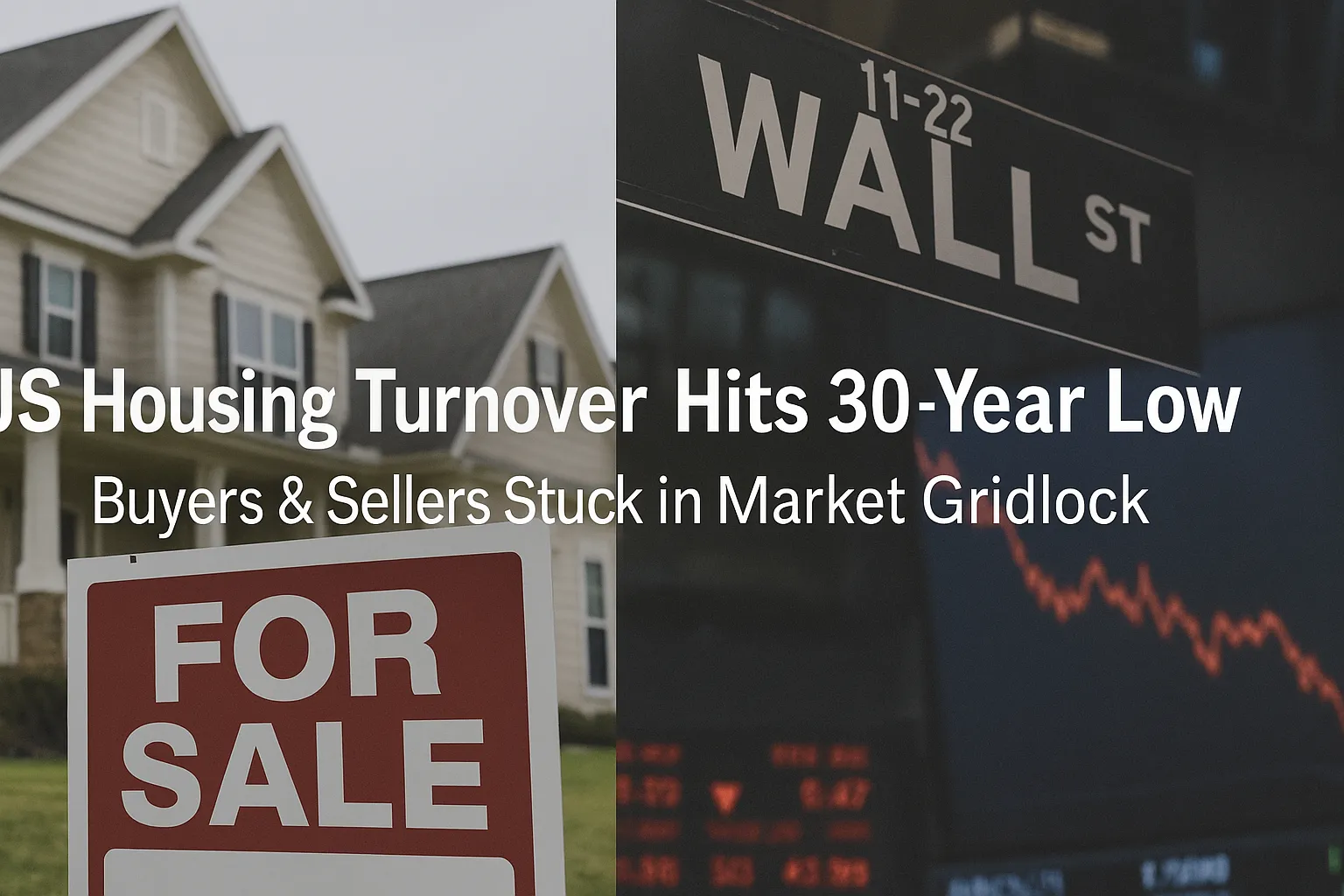
In 2025, the U.S. housing market is experiencing an unprecedented downturn. According to data from Redfin and the Associated Press (AP), in the first nine months of this year, only 28 out of every 1,000 homes in the U.S. were sold , the lowest level in nearly 30 years.
Analysts point out that the core problem in the market is not "high prices," but "no one is moving"—sellers are not selling, and buyers are afraid to buy, freezing the market.
For years, liquidity in the U.S. housing market has been a symbol of economic vitality. Today's low transaction volume not only suppresses housing price growth but also has a ripple effect on the construction, home improvement, and lending industries.
The current average 30-year mortgage rate in the United States is about 6.17% , which is lower than the peak in 2024, but is still much higher than the 2.5%–3.0% during the pandemic.
Most homeowners have low-interest loans, so even if house prices rise, they are unwilling to sell, because moving to a new home means higher interest rates and higher monthly payments.
This is known as the " lock-in effect ":
Sellers are trapped in low-interest loans and are unwilling to list their properties for sale.
Buyers are constrained by high interest rates, leading to a decline in their ability to pay.
Bank lending has shrunk, and credit liquidity has decreased.
In other words, even if the Federal Reserve cuts interest rates, it will be difficult to immediately unfreeze real estate transactions.
The health of the housing market is often closely linked to job mobility. In recent years, the wave of remote work and regional relocation has driven a significant amount of housing demand in the United States; however, this trend is expected to slow down significantly by 2025.
The labor market is stabilizing, and employees' willingness to move to other cities is decreasing;
Inflationary pressures are eroding household savings;
Corporate hiring has cooled down, and incentives for relocation have decreased.
The result is that the decline in housing turnover has become a nationwide phenomenon , not only in first-tier cities, but also in traditionally high-turnover areas such as Texas and Florida, where transactions have declined significantly.
Although transaction volume plummeted, home prices did not follow suit. According to data from Zillow and Redfin, national home prices in the United States fell by only about 1.2% year-over-year, with some areas even experiencing slight increases.
This means the market is still in a "supply and demand stalemate": there are few properties available and few buyers, with both sides adopting a wait-and-see approach.
But risks are accumulating:
Property taxes and maintenance costs put long-term pressure on property owners;
Investment property returns declined , and rental growth slowed.
A liquidity crunch could lead to a contraction in some developers and real estate agencies.
Analysts generally believe that if this situation continues until 2026, the US housing market may experience a "structural adjustment"—not a price collapse, but a prolonged slump in transactions.
For conservative investors : focus on rental returns rather than short-term appreciation. Consider second-tier cities with low property taxes and low vacancy rates.
Institutional funds : Prioritize the "Single-Family Rental (SFR)" and "Multi-Family Apartment" sectors to lock in cash flow.
Owner-occupier buyers : If you have a stable income, you can take advantage of the window of opportunity when mortgage rates are temporarily lowered to secure a long-term residence.
Beware of blindly buying at the bottom : Frozen trading does not mean the turning point has arrived; market recovery often lags behind interest rate declines by 6–12 months.
The housing market freeze may last until mid-2026 unless one of the following three scenarios occurs:
Mortgage rates have fallen below 5% , restoring liquidity.
Increased job mobility drives demand for new homes;
Policy incentives (such as tax breaks and first-time homebuyer subsidies) have reignited the willingness to transact.
Experts believe that the US real estate market is transitioning from a "price-driven era" to a "liquidity-driven era"—price is no longer the core variable; transaction volume and holding period are the key factors.
The sharp drop in housing transactions reflects weak consumer confidence and structural imbalances.
High interest rates, low liquidity, and locked-up ownership have plunged the real estate market into a situation of "visible prosperity but immobile reality."
Whether the U.S. housing market can regain its vitality in the coming year will depend on the determination of policymakers and the rebuilding of market confidence.
Before that, "freezing" may become the norm.
BrokerHivex is a financial media platform that displays information from the public internet or user-uploaded content. BrokerHivex does not support any trading platform or instrument. We are not responsible for any trading disputes or losses arising from the use of this information. Please note that the information displayed on the platform may be delayed, and users should independently verify its accuracy.


 Ro***le