 BrokerHiveXBrokerHiveXBrokerHiveX
Summary:The global mining industry is facing a double whammy of declining profits and rising energy costs following the Bitcoin halving. Meanwhile, the rapid growth in AI computing power demand is intensifying competition for electricity, chip, and data center resources, forcing mining companies to seek new paths for "computing power transformation."
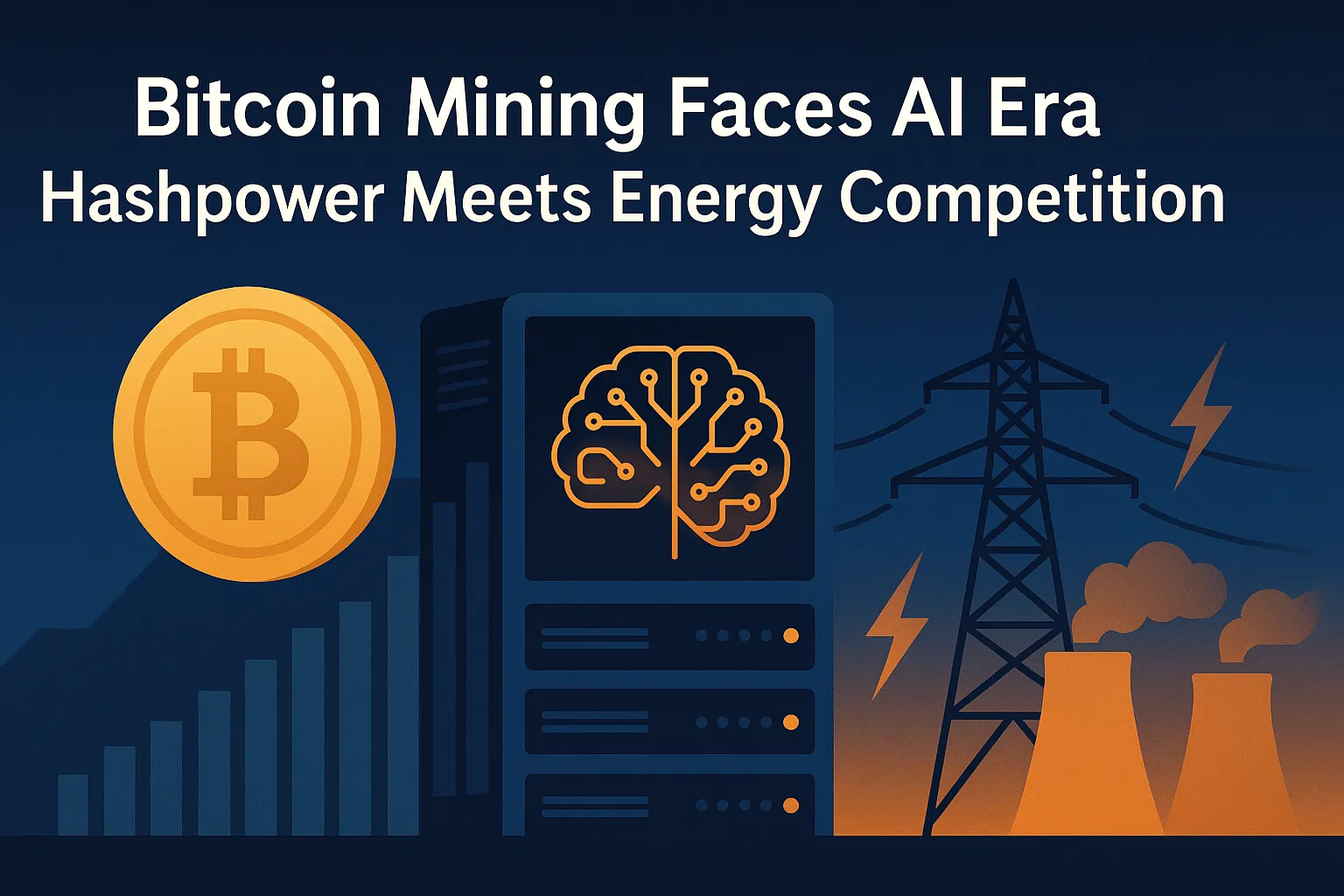
Since the fourth block reward halving in 2024, the Bitcoin block reward has decreased from 6.25 to 3.125. Although the price of Bitcoin rebounded briefly, the long-term trend has not offset the rising cost of computing power. The profit margins of most small and medium-sized mining farms have been severely compressed, and some mining companies in areas with high electricity prices have successively shut down their equipment.
Data shows that mining difficulty remains at historically high levels, while Bitcoin prices fluctuate frequently, making the combination of "electricity price + computing power" a key factor determining survival. Industry insiders generally believe that the computing power industry is entering a "survival of the fittest" phase , with the future market dominated by a few large energy mining companies and high-efficiency mining machine manufacturers.
The international energy market has been volatile over the past year, particularly with a significant increase in natural gas and electricity costs. Most mining farms are concentrated in regions where electricity subsidies are being gradually reduced, leading to a substantial increase in average computing power costs.
Some countries and regions have begun to tighten their electricity policies, imposing additional energy taxes on cryptocurrency mining or restricting electricity quotas for industrial and commercial use. Meanwhile, climate policies and carbon emission regulations have also become significant risk factors for the mining industry.
In Europe and North America, an increasing number of mining companies are seeking renewable energy partners or building “green data centers” to cope with policy changes and public pressure.
Globally, the explosive growth in AI training computing power has triggered a redistribution of energy and hardware resources. The data center construction boom has driven up demand for GPUs, chips, and cooling systems, leading to fierce competition among Bitcoin mining companies in procurement and energy bidding.
Some large mining companies have begun exploring a "hybrid computing power" approach—converting some of their mining infrastructure into AI inference or cloud computing services to improve utilization and cash flow stability. This trend is particularly evident in North America, Kazakhstan, and Eastern Europe, creating a new landscape of "cross-border integration of computing power."
Mining companies' business models are shifting from solely "profiting from mining coins" to "monetizing diversified computing power."
Some mining companies have signed long-term computing power leasing agreements with AI companies;
Another group of mining companies are setting up high-performance computing (HPC) centers to provide computing power services for scientific research, image training, and Web3 projects;
Some companies even issue computing power tokens to raise funds and allocate resources.
This trend signifies that the core competitiveness of the mining industry is shifting from "energy price advantage" to "computing efficiency + customer conversion capability".
Over the next 12 months, the core keywords for Bitcoin mining will be "efficiency, transformation, and cooperation".
Efficiency : Eliminating outdated mining machines and introducing AI-assisted computing power scheduling.
Transformation : Expanding into the AI, HPC, and cloud computing markets to increase the liquidity of computing power assets.
Collaboration : Building and sharing infrastructure with energy companies and cloud service providers to share costs.
While the Bitcoin halving puts pressure on short-term profits, "computing power assetization" and "energy digitization" will become new growth engines for the mining industry. With the convergence of AI and crypto technology, this industry may redefine the logic of "computing power equals wealth" within a few years.
The Bitcoin halving is not the end, but the beginning of the computing power era.
When mining meets AI, the combined forces of energy, algorithms, and capital are reshaping the underlying structure of the digital economy.
BrokerHivex is a financial media platform that displays information from the public internet or user-uploaded content. BrokerHivex does not support any trading platform or instrument. We are not responsible for any trading disputes or losses arising from the use of this information. Please note that the information displayed on the platform may be delayed, and users should independently verify its accuracy.

 Ro***le
 Su***ey