 BrokerHiveXBrokerHiveXBrokerHiveX
Summary:The European Parliament has formally adopted the implementing rules of the Crypto Asset Markets Act (MiCA), establishing the world's first comprehensive regulatory system covering cryptocurrencies, stablecoins, exchanges, and custodians. The new regulations lay the institutional foundation for digital finance in Europe, marking the beginning of a "rule-based era" for the global crypto market.
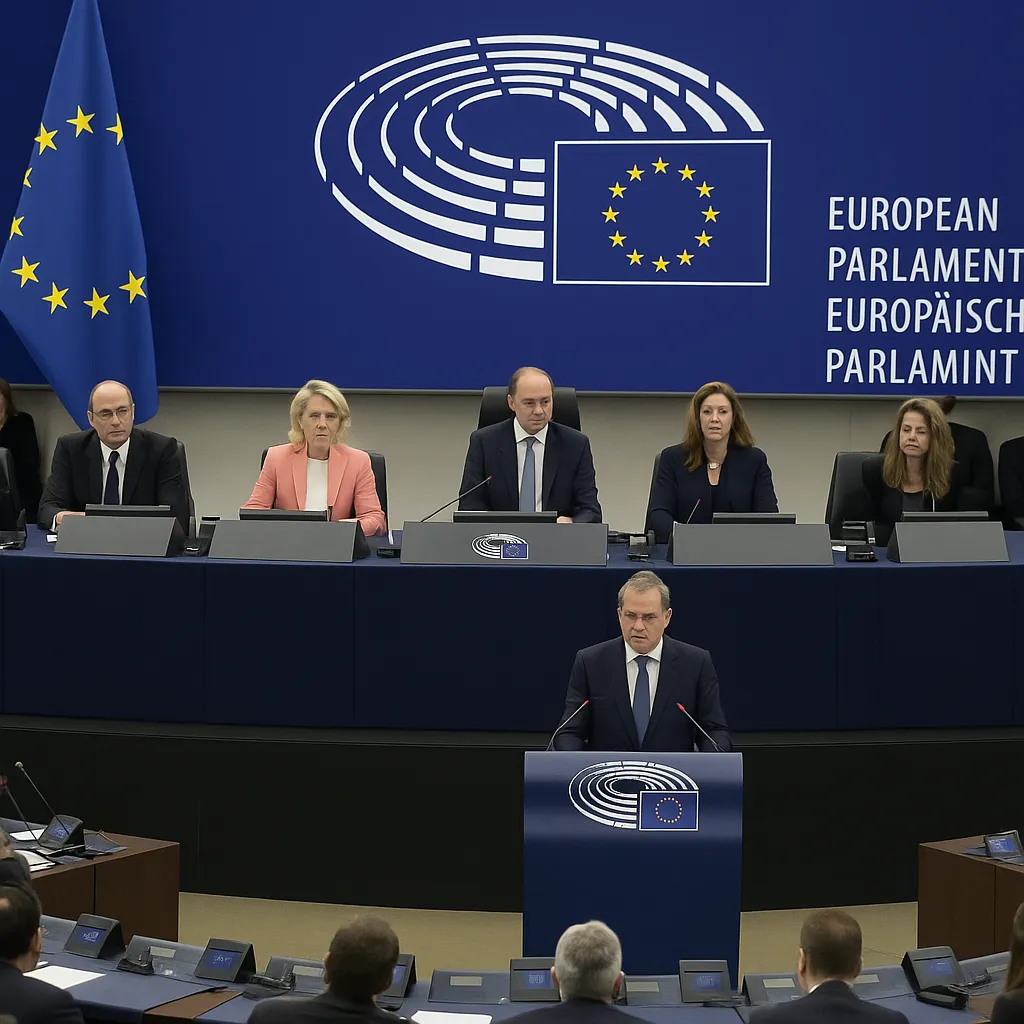
In November 2025, the European Parliament formally adopted the final implementing rules of the Markets in Crypto-Assets Regulation (MiCA) in Brussels.
This marks the official launch of the world's first comprehensive regulatory system covering cryptocurrencies, stablecoins, trading platforms, and custody institutions .
The adoption of MiCA has not only reshaped the European digital asset market, but will also provide a template for global regulation.
European Commission Vice-President Valdis Dombrovskis stated at a press conference:
"The future of digital finance requires rules, and MiCA's goal is to find a balance between protecting innovation and maintaining financial stability."
The legislative process for MiCA can be described as "the longest negotiation in regulatory history".
Since the European Commission first proposed the digital finance strategy in 2019, MiCA has undergone five years, three draft revisions, and hundreds of hearings .
The main controversy centers on:
Capital requirements for stablecoin issuers;
Registration and reporting obligations of cryptocurrency trading platforms;
Should NFTs and DeFi be included in the scope of regulation?
Cross-border regulatory coordination mechanism.
The final version was finalized in the fall of 2025 and received the support of the vast majority of lawmakers.
The European Council plans to fully implement it by mid-2026.
MiCA's architecture is described as an extension of the Financial Markets Instructions II (MiFID II) in the crypto space, and it primarily comprises four core pillars:
ART (Asset-Referenced Tokens) : Stablecoins pegged to multiple assets, requiring issuers to maintain equivalent reserves and be subject to audits by the European Central Bank;
EMT (E-Money Tokens) : Stablecoins pegged to a single fiat currency (such as the euro), treated as electronic money, and issued by banks or licensed institutions.
Any stablecoin issued without permission will be prohibited from circulation in the European Union.
Exchanges, wallets, custodians, brokers, and market makers are required to apply for a unified CASP (Crypto Asset Service Provider) license and register with the European Securities and Markets Authority (ESMA).
All cryptocurrency issuers are required to publish a white paper , which includes the technical architecture, risk statement, and governance structure.
At the same time, investors must be aware that the asset is not covered by deposit insurance.
MiCA establishes a unified regulatory database that allows member state regulators to share information on company registration and transaction reports, preventing regulatory arbitrage.
MiCA's greatest innovation lies in its institutional integration :
Regardless of which EU member state a company is registered in, it can operate throughout Europe after obtaining a CASP license.
This is known as the "EU Passporting" system, similar to a unified passport for the banking industry.
However, at the same time, the cost of corporate compliance has also increased significantly.
The white paper needs to be certified by lawyers and auditing firms;
Stablecoin reserve assets must be audited monthly by a third party.
Cryptocurrency custody institutions need to establish risk buffer funds.
Industry insiders say, "MiCA is a threshold, but also a key—only those who comply can enter a larger market."
The implementation of MiCA will completely end the era of "regulatory vacuum".
In the past, most cryptocurrency trading platforms operated in the EU as registered entities, rather than as financial institutions.
Under the new regulations, all trading platforms must complete their license applications within 18 months, or they will be prohibited from providing services to the public in the EU.
Major exchanges such as Binance, Kraken, Bitstamp, and OKX Europe have all initiated compliance review procedures.
In particular, stablecoin trading pairs will be subject to strict restrictions, and non-compliant stablecoins may be delisted.
Industry insiders predict a round of regulatory reshuffling will occur in early 2026:
Only trading platforms with compliance audits, proof of reserves, and local registration can remain in the European market.
MiCA's impact on the stablecoin market can be described as "system-level".
In the future, stablecoins circulating in the EU must be authorized, and their issuance and reserve mechanisms will be directly supervised by the European Central Bank.
Unlicensed USD stablecoins (such as USDT and USDC) may be subject to trading volume limits;
Euro stablecoins (such as EUROe and Stasis EURS) are expected to benefit from policy incentives;
Banks and financial institutions may launch their own compliant stablecoins, creating a competitive landscape.
Market analysts believe this will drive stablecoins from "free issuance" to "bank issuance".
The final version of MiCA has chosen not to directly include NFT and decentralized finance (DeFi) projects.
However, the document clearly states:
"If an NFT has divisibility or financial attributes, it should be regarded as a security-type crypto asset and subject to joint regulation by MiFID and MiCA."
Meanwhile, the European Commission plans to assess the feasibility of DeFi regulation in 2026.
This means that EU regulators have left room for future interfaces.
The European financial community generally welcomed MiCA.
The Frankfurt Financial Centre issued a statement saying, "MiCA establishes a legal status for digital assets, which will attract institutional investors back to the European market."
At the same time, several crypto companies have expressed concerns:
Smaller exchanges may be forced to exit the market due to excessively high compliance costs;
The financing threshold for startups will rise significantly;
The pace of innovation may be slowed by regulation.
However, most analysts believe that in the long run, clear rules will actually lead to capital security and the accumulation of trust .
The passage of MiCA has triggered a global regulatory response.
Countries such as the United States, the United Kingdom, Japan, Singapore, and Australia are all studying the development of local standards with reference to the MiCA framework.
In particular, some provisions of the U.S. Congress’s Digital Asset Market Structure Act (DAMS) have similar logic to MiCA.
The International Monetary Fund (IMF) commented:
"Europe has transformed from a passive defender to a regulatory leader, and MiCA may become the common language of global crypto compliance."
This will give the EU strategic leadership in digital finance governance.
The implementation of MiCA marks Europe's entry into a new phase where regulation and innovation coexist .
It is both a constraint and an opportunity:
For businesses, this means higher standards and greater transparency;
For investors, this means a safety margin and information symmetry;
For the global market, this means that digital finance is moving from "wild growth" to a "legal ecosystem".
In his closing remarks, the Chair of the European Parliament's Financial Committee summarized:
“Crypto assets are no longer a fringe phenomenon. MiCA is making digital finance a formal part of the European economic structure.”
Over the next decade, MiCA may become a landmark regulation in the history of global financial regulation, much like the Basel Accords did.
BrokerHivex is a financial media platform that displays information from the public internet or user-uploaded content. BrokerHivex does not support any trading platform or instrument. We are not responsible for any trading disputes or losses arising from the use of this information. Please note that the information displayed on the platform may be delayed, and users should independently verify its accuracy.


 FX***00
 Ad***41
 ni***ddRo***le
 Su***ey