 BrokerHiveXBrokerHiveXBrokerHiveX
The SEC was established in 1934 under the Securities Exchange Act of 1934. Its responsibilities include formulating securities market regulations, approving company listing applications, supervising the operations of securities firms and exchanges, and combating securities fraud and insider trading.
Investor protection: ensuring investors obtain true and comprehensive financial and operational information;
Information disclosure supervision: requires listed companies to submit financial reports and interim information such as 10-K, 10-Q, and 8-K;
Law enforcement and investigation: investigating fraud, insider trading, market manipulation and other illegal activities;
Regulate market participants: such as securities firms, investment advisors, asset management companies, exchanges, etc.;
Promote the healthy development of the capital market.
The SEC, headquartered in Washington, D.C., has five commissioners (including the chair), nominated by the president and confirmed by the Senate for five-year terms, ensuring a bipartisan balance of power. The SEC comprises several law enforcement and regulatory divisions, including the Division of Corporation Finance, the Division of Trading and Markets, and the Division of Investment Management.
Public Company
Stock exchanges (such as NYSE, NASDAQ)
Brokers and Securities Dealers
Investment Advisors and Hedge Funds
Public securities issuance projects (such as IPOs, ETFs, bonds, etc.)
The SEC is widely regarded as a global benchmark for securities regulation, and its standards have a profound impact on global financial markets. Many countries have referenced the SEC's institutional design when establishing their own securities regulatory agencies.
The SEC is a core institution that maintains the integrity and stability of the U.S. capital market. It plays a crucial role in investor protection, market oversight, and prudent support for financial innovation. For investors, understanding the SEC's system and functions can help them better understand the operating logic and regulatory environment of the U.S. stock market.
BrokerHivex is a financial media platform that displays information from the public internet or user-uploaded content. BrokerHivex does not support any trading platform or instrument. We are not responsible for any trading disputes or losses arising from the use of this information. Please note that the information displayed on the platform may be delayed, and users should independently verify its accuracy.

FOREX.com is one of the world's most recognized retail forex brokers, known for its strong regulatory background, transparent pricing structure, and professional-grade trading platform. In 2025, competition among forex brokers intensified, particularly in terms of spreads, order execution speed, and platform functionality. FOREX.com continues to position itself as a platform primarily geared towards disciplined and serious traders, rather than a broker that simply relies on bonuses to attract novice traders.
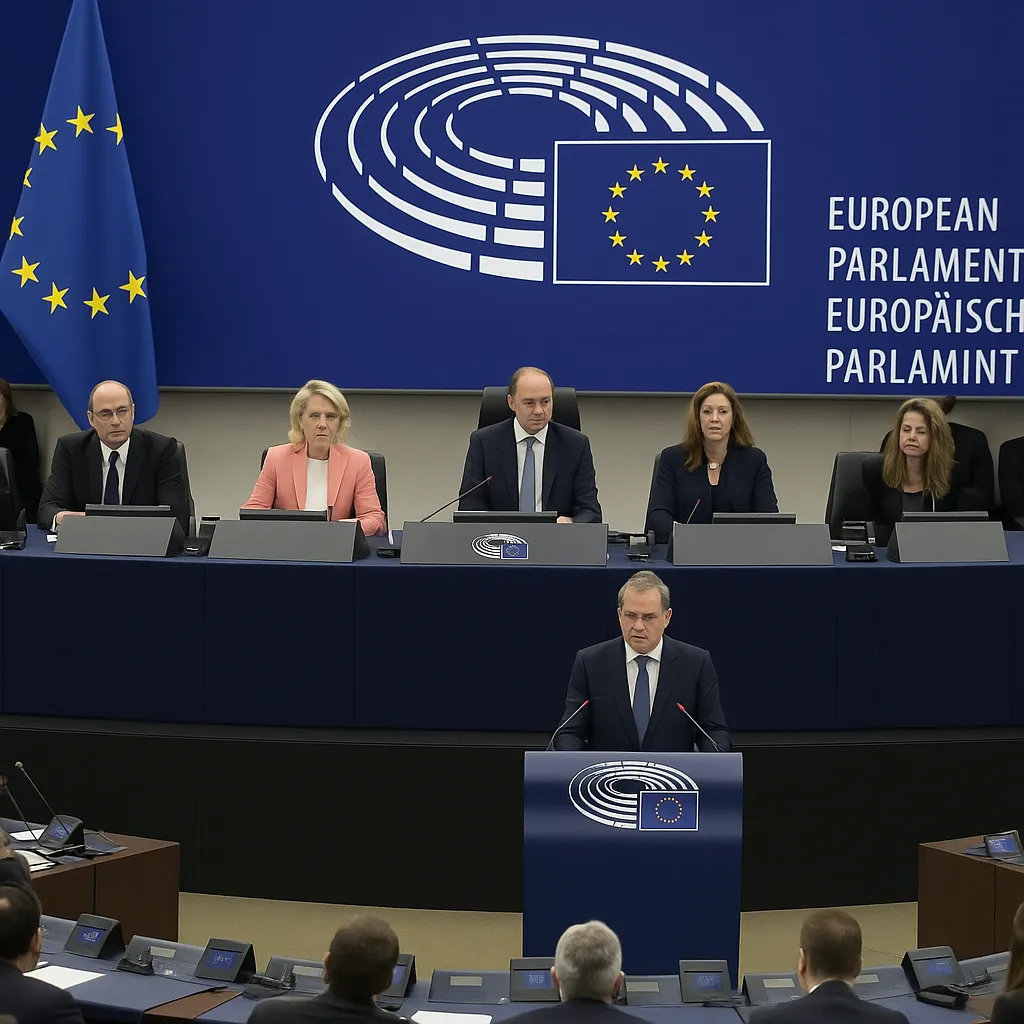
The European Parliament has formally adopted the implementing rules of the Crypto Asset Markets Act (MiCA), establishing the world's first comprehensive regulatory system covering cryptocurrencies, stablecoins, exchanges, and custodians. The new regulations lay the institutional foundation for digital finance in Europe, marking the beginning of a "rule-based era" for the global crypto market.

Japan's Financial Services Agency (FSA) has approved the JPY Token (JPYT), a fiat-backed stablecoin issued by Sumitomo Mitsui Trust Bank, marking Japan as the first major economy in Asia to allow banks to issue stablecoins. The project is pegged 1:1 to the Japanese yen and is fully regulated by the FSA, signifying the traditional banking system's full entry into the digital currency era.
The latest quarterly data shows that holdings in US Bitcoin spot ETFs have reached a record high, with institutional investors holding over 1.3 million BTC. Traditional asset management giants such as BlackRock and Fidelity have become major buyers, marking a shift in crypto assets from retail speculation to institutional allocation, and ushering in a new institutionalized phase for global digital finance.