BrokerHiveXBrokerHiveXBrokerHiveX
Summary:Bitcoin's price briefly dipped below $112,000, with Binance seeing a single-day net inflow of nearly 7,000 BTC, ending a downward trend that began in March. Meanwhile, US Bitcoin ETFs saw a net outflow of $812 million that day, the second-highest on record. Concentrated selling by whales and short-term holders exacerbated market selling pressure. Despite this, Bitcoin is attempting to recover to $114,000. Investors should monitor on-chain inflows, the whale ratio, institutional funding trends, and macroeconomic events, and invest cautiously. #BitcoinInflows #WhaleSelloffs #InstitutionalFunds #MarketVolatility #InvestmentDirection

On August 1st, Bitcoin's price briefly dipped below $112,000 (Source: CryptoQuant), hitting a three-week low and triggering market volatility. Despite a subsequent attempt to recover to $114,000, it continues to face selling pressure from both large on-chain investors and institutions in the short term. The Federal Reserve's interest rate decision, fluctuations in the US dollar index, and macroeconomic risk events are likely to continue to impact investor sentiment, causing prices to fluctuate between $110,000 and $118,000.
On that day, short-term holders (STHs) transferred over 40,000 BTC in net losing positions to exchanges within 24 hours, the largest single-day drop since July 15th. Net inflows to exchanges reached 16,417 BTC, a significant increase from the daily average of 5,300 BTC in early July, ending the downward trend in inflows since March (Source: CryptoQuant). Meanwhile, the exchange whale ratio soared above 0.70, indicating that large inflows are primarily driven by large whale addresses, which typically signals a continued sell-off.
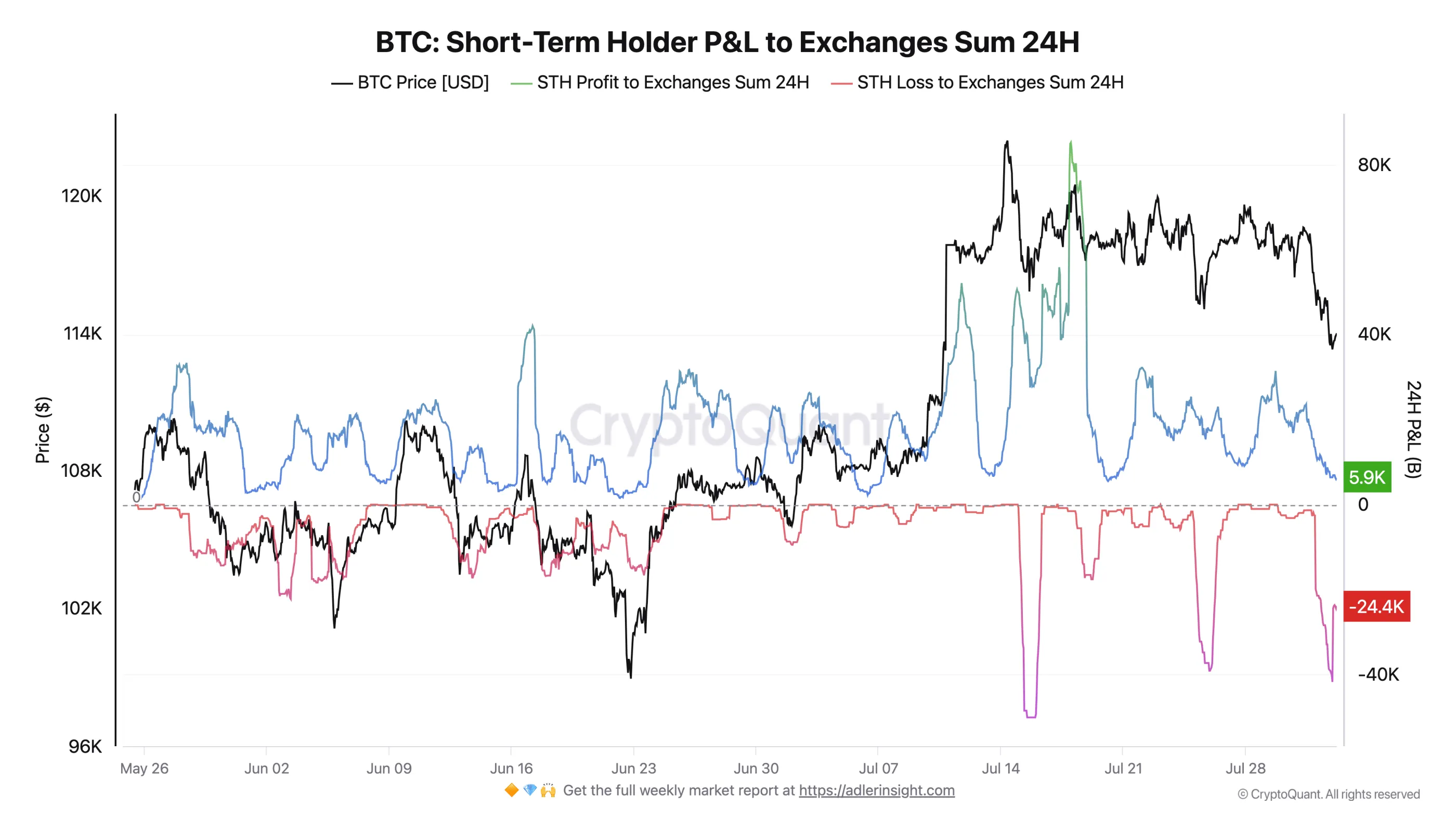
Profit/loss of Bitcoin STH coins on exchanges. Source: CryptoQuant
Amidst high volatility, US spot Bitcoin ETFs saw net outflows of $812 million on August 1st, the second-highest single-day outflow on record (Source: Cointelegraph). Analyst Skew, monitoring the order book, observed large sell-offs during the illiquid weekend, reflecting a rapid reduction in institutional holdings to mitigate risk before the market opened on Monday (Source: Skew). The dramatic outflow of ETF funds highlights institutional uncertainty regarding the short-term outlook and heightened risk appetite.
In the current highly volatile market, investors can adopt a diversified and stable layout strategy: split the target position into several parts and gradually enter the market around US$112,000 to smooth costs and reduce the risk of timing selection; at the same time, they can hedge downside risks through regular investment combined with put options or inverse contracts to keep exposure controllable when the market fluctuates violently; in the range of US$110,000-118,000, flexibly carry out small-scale long-short hedging or seize short-term price difference opportunities driven by macro events; and allocate 5%-10% of total assets to Bitcoin, while moderately increasing the allocation to large-cap public chains such as Ethereum, as well as stablecoins or DeFi income tools, to diversify the risks brought by the violent fluctuations of a single asset.
Want to be the first to grasp global market trends and investment opportunities? Follow us on BrokerHiveX for the latest in-depth analysis and real-time information!
BrokerHivex is a financial media platform that displays information from the public internet or user-uploaded content. BrokerHivex does not support any trading platform or instrument. We are not responsible for any trading disputes or losses arising from the use of this information. Please note that the information displayed on the platform may be delayed, and users should independently verify its accuracy.