BrokerHiveXBrokerHiveXBrokerHiveX
Summary:Ethereum is entering the "Gigabit Era." By introducing the zkEVM and real-time proofs, it's projected to reach 10,000 transactions per second (TPS) by 2031. This move not only preserves Ethereum's advantages of decentralization and security, but also promises to completely resolve the blockchain "trilemma." With the advancement of native Rollup, Ethereum's Layer 1 will fundamentally achieve scalability and performance improvements, but this technological transition still requires vigilance against security challenges. #zkEVM #EthereumScaling #ZeroKnowledgeProofs #RealTimeVerification #NativeRollup
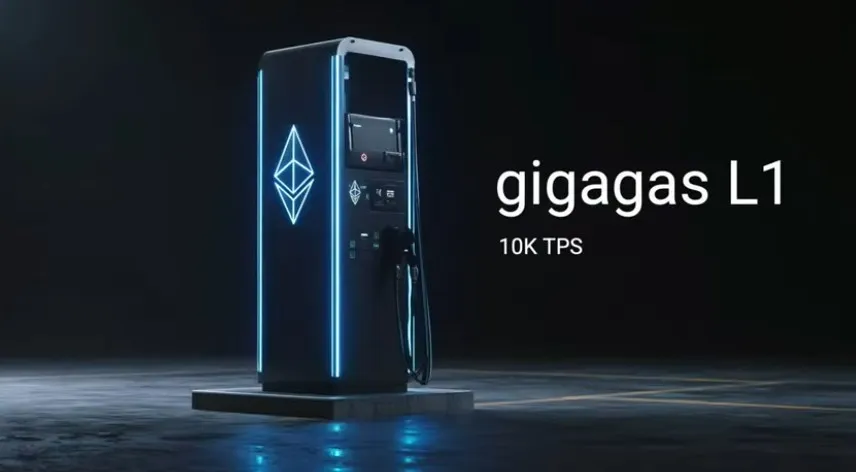
At the 2025 EthCC conference, Ethereum researcher Justin Drake proposed: "We are entering the gigabit era, that is, Layer 1 can reach 10,000 TPS." Over the past decade, Ethereum has always adhered to the concept of decentralization, but it has sacrificed performance. Now, through ZK technology, this limitation will be broken.
Compared to "data-centric chains" like Solana, the Ethereum network, comprised of over one million validators, offers strong censorship resistance. However, it currently only handles 18-20 transactions per second (TPS), far less than Solana's 1,500. Consequently, ZK (zero-knowledge proofs) are considered a key enabler. In the future, validators will no longer redo all transactions, instead simply verifying mathematical proofs, significantly improving performance.
zkEVM, a ZK virtual machine fully compatible with the existing EVM, will be integrated into Layer 1 within a year. The Linea team, a spin-off from ConsenSys, is also driving this progress. Its zero-knowledge verification mechanism allows computational load to be scaled exponentially without increasing verification difficulty, even supporting smartwatch-level hardware verification.
Real-time proofs are the backbone of this system. The Succinct team's latest progress indicates that by the end of the year, a 200-GPU cluster will be able to verify 99% of Ethereum mainnet blocks within 12 seconds. This means Ethereum will be free to increase its gas limit, stimulating more economic activity.
Despite the promising outlook, the transition requires caution. To avoid network disruption, Ethereum will implement a gradual, multi-client migration. The gas limit has been raised to 45 million in 2025, with projected throughput reaching 2,000 TPS four years later and 10,000 TPS by 2031.
However, ZKVM technology is still in its early stages, posing risks such as "Prover Killer" attacks. The Ethereum Foundation has set hardware requirements: less than $100,000 and a power consumption of 10 kilowatts. The goal is to allow even "garage validators" to participate in maintaining the system.
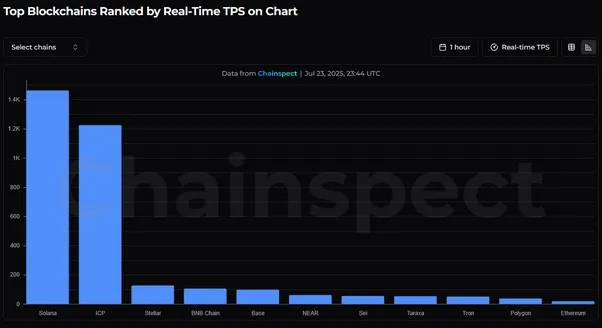
Ethereum, the most decentralized blockchain besides Bitcoin, is running as slow as a rainy week. (chainspect.app/chart)
Native Rollup will enable Layer 1 to verify Layer 2 state, improving overall security. Linea plans to operate as a native Rollup, hailed as a new solution with greater flexibility and programmability than ETH 2.0's sharding. While still theoretical, once ZK Snarking matures, native Rollup will be fully integrated into Ethereum's underlying architecture.
Investor sentiment is currently positive, and the ecosystem is eagerly anticipating Ethereum's performance upgrades. The application of ZK technology not only improves network efficiency but also gives Ethereum a distinct advantage in the fierce blockchain competition. However, given the complexity and hardware requirements of ZKVM, technical and security considerations remain uncertain in the short term.
The arrival of Ethereum's "Gigabit Era" represents a long-term positive development. However, investors should rationally assess the time required for ZK technology deployment and potential risks. Focusing on ZK ecosystem projects, L2 solutions, and their integration with the mainnet can be a strategic consideration.
The innovation of Ethereum's scaling technology will not only affect its future development, but will also reshape the entire blockchain landscape.
Want to be the first to grasp global market trends and investment opportunities? Follow us on BrokerHiveX for the latest in-depth analysis and real-time information!
BrokerHivex is a financial media platform that displays information from the public internet or user-uploaded content. BrokerHivex does not support any trading platform or instrument. We are not responsible for any trading disputes or losses arising from the use of this information. Please note that the information displayed on the platform may be delayed, and users should independently verify its accuracy.